eanNews
  • EAN News
    • All Executive Page President’s Corner EAN News EAN Congress news Interviews
      EAN News

      Open Call: Join the EAN Guideline Production Group

      May 8, 2026

      EAN Congress news Photo of a sheet of paper, pencil and crumpled paper on a desk.

      Why Neurology? Read some compelling answers from our EAN 2026 essay contest winners!

      May 8, 2026

      EAN News

      Obituary – Regina Katzenschlager (1964 – 2026)

      May 7, 2026

      EAN News

      EAN Head Office Awarded Workplace Health Promotion Seal of Approval by Austrian Health Fund

      May 6, 2026

      Executive Page

      Executive Page: Looking Back and Moving Forward with eanNews

      April 15, 2026

      Executive Page

      Executive Page: Multiple Opportunities to Serve & Support EAN & Neurology

      March 12, 2026

      Executive Page

      Executive Page: Building an Academic Path for Neurologists in Europe

      February 11, 2026

      Executive Page Head and shoulders portrait photo of Irena Rektorova, in colourful dress

      Executive Page: Get Ready to Join us for our 12th Congress in Geneva!

      January 12, 2026

      President’s Corner

      President’s Corner – April 2026

      April 14, 2026

      President’s Corner

      President’s Corner – March 2026

      March 10, 2026

      President’s Corner

      President’s Corner – February 2026

      February 11, 2026

      President’s Corner

      President’s Corner – January 2026

      January 12, 2026

      EAN News

      Open Call: Join the EAN Guideline Production Group

      May 8, 2026

      EAN News

      Obituary – Regina Katzenschlager (1964 – 2026)

      May 7, 2026

      EAN News

      EAN Head Office Awarded Workplace Health Promotion Seal of Approval by Austrian Health Fund

      May 6, 2026

      EAN News

      The ENERGY Project: A Global Collaborative Response to the Neurological Impact of COVID-19

      April 20, 2026

      EAN Congress news Photo of a sheet of paper, pencil and crumpled paper on a desk.

      Why Neurology? Read some compelling answers from our EAN 2026 essay contest winners!

      May 8, 2026

      EAN Congress news

      EAN Congress 2026: Hands-On Courses & eHands-On Courses Open for Registration

      April 17, 2026

      EAN Congress news

      EAN 2026 Congress Quiz – We Have the Winners!

      March 19, 2026

      EAN Congress news 12th Congress of the European Academy of Neurology celebrates with main headline that abstract submissions have hit record high!

      EAN 2026 Hits New All-Time Abstract Submission Record

      February 13, 2026

      Interviews

      Video Interview: Elena Ruiz de la Torre, Patient Representative, EAN Scientific Panel on Headache

      January 16, 2026

      Interviews

      Video Interview: EAN President, Elena Moro, Discusses Her Experience & Achievements in the Role

      January 12, 2026

      Interviews

      Video Interviews: National Neurological Society Presidents Provide Insights into the State of Neurology Across Europe

      November 14, 2025

      Interviews Cropped portrait of Amelia Hursey, surrounded by text "EAN Patient Representative Interview. Amelia Hursey, Scientific Panel on Movement Disorders"

      Video Interview: Amelia Hursey, Patient Representative, EAN Scientific Panel on Movement Disorders

      November 5, 2025

  • Research
    • All Paper of the Month Research Highlights Research Funding
      Research

      EMA Neurology News – April 2026

      April 21, 2026

      Research Highlights

      Research Highlights of the Month – April 2026

      April 15, 2026

      Paper of the Month

      Research Paper of the Month: Efficacy and safety of minocycline in patients with acute ischaemic stroke (EMPHASIS)

      April 8, 2026

      Research Highlights

      Research Highlights of the Month – March 2026

      March 12, 2026

      Paper of the Month

      Research Paper of the Month: Efficacy and safety of minocycline in patients with acute ischaemic stroke (EMPHASIS)

      April 8, 2026

      Paper of the Month

      Research Paper of the Month: Coffee and Tea Intake, Dementia Risk, and Cognitive Function

      March 2, 2026

      Paper of the Month

      Research Paper of the Month: Fremanezumab in Children and Adolescents with Episodic Migraine

      February 11, 2026

      Paper of the Month

      Research Paper of the Month: Medical Management and Revascularization for Asymptomatic Carotid Stenosis

      January 12, 2026

      Research Highlights

      Research Highlights of the Month – April 2026

      April 15, 2026

      Research Highlights

      Research Highlights of the Month – March 2026

      March 12, 2026

      Research Highlights

      Research Highlights of the Month – February 2026

      February 11, 2026

      Research Highlights

      Research Highlights of the Month – January 2026

      January 13, 2026

      Research Funding

      Draft Innovative Health Initiative (IHI) Funding Call topics related to the brain

      May 2, 2025

      Research Funding 'Horizon Europe' in large 3D text, surrounded by illustrations of people undertaking various activities

      Upcoming Horizon Europe Funding Opportunities for Neurology Researchers (Draft Calls)

      May 2, 2025

  • Education
    • All eLearning Mid-Career Resident and Research Fellows Student Corner Fellowship reports
      Resident and Research Fellows

      EAN Spring School 2026 Links Brain With Heart, Gut, & Breath

      May 8, 2026

      EAN Congress news Photo of a sheet of paper, pencil and crumpled paper on a desk.

      Why Neurology? Read some compelling answers from our EAN 2026 essay contest winners!

      May 8, 2026

      Resident and Research Fellows

      EAN Regional Teaching Day in Yerevan, Armenia, 22 May

      April 27, 2026

      Fellowship reports

      Clinical Fellowship Reports: Paris & Barcelona

      April 3, 2026

      eLearning

      Call for Applications: e-Learning Deputy Editor-in-Chief

      April 2, 2026

      eLearning

      24 Days, 24 Modules: A Strong Start to the Year on eanCampus

      March 19, 2026

      eLearning

      Discover What’s Ahead on eanCampus: Live Events Planned for the First Half of 2026

      February 12, 2026

      eLearning

      EAN Invites You to Join the Challenge: 24 Days, 24 Modules!

      December 22, 2025

      Mid-Career

      My Experience: Certificate of Advanced Studies in Brain Health Exceeds Expectations

      March 12, 2026

      Mid-Career

      Join us in Vienna on 15–16 May 2026 for EAN Congress Masterclasses

      March 11, 2026

      Mid-Career

      Certificate of Advanced Studies in Brain Health Starts Second Round in 2026

      January 29, 2026

      Mid-Career

      Certificate in Clinical Research in Neurology launching at EAN 2026 Congress!

      November 26, 2025

      Resident and Research Fellows

      EAN Spring School 2026 Links Brain With Heart, Gut, & Breath

      May 8, 2026

      Resident and Research Fellows

      EAN Regional Teaching Day in Yerevan, Armenia, 22 May

      April 27, 2026

      Resident and Research Fellows

      Resident & Research Fellows Section Sets Priorities at Annual Meeting in Bucharest

      April 2, 2026

      Resident and Research Fellows

      EAN Autumn School application NOW OPEN until 1 June

      April 1, 2026

      Student Corner Photo of a sheet of paper, pencil and crumpled paper on a desk.

      Why Neurology? Read some compelling answers from our EAN 2026 essay contest winners!

      May 8, 2026

      Student Corner

      Apply now for the Student Teaser Fellowship 2026

      February 1, 2026

      Student Corner

      Neurology for Undergraduate Medical Students – New Online Course Gets Off to a Successful Start

      January 13, 2026

      Student Corner

      An EAN Student Member’s experience at the EAN Congress – Helsinki 2025

      September 1, 2025

      Fellowship reports

      Clinical Fellowship Reports: Paris & Barcelona

      April 3, 2026

      Fellowship reports

      Student Teaser Fellowship Reports 2024: Brussels, Paris, & Zurich

      October 10, 2025

      Fellowship reports

      Clinical Fellowship Reports 2024: Göttingen, London, & Salzburg

      October 10, 2025

      Fellowship reports

      Research Fellowship Reports 2023/2024: Basel, Edinburgh, & Barcelona

      October 10, 2025

  • Other News
    • All EAN Staff EBC News in general Surveys
      Other News

      Nomination Window for Brain Prize 2027 Now Open

      May 7, 2026

      EAN News

      EAN Head Office Awarded Workplace Health Promotion Seal of Approval by Austrian Health Fund

      May 6, 2026

      Brain Health

      Apply Now – Postgraduate Studies in Neuroscience and Brain Health at Ghent University, Belgium

      April 29, 2026

      Other News

      Watch: Neuroanatomist Jill Bolte Taylor Delivers Plenary Lecture at Radiology Event

      April 17, 2026

      EAN Staff

      EAN Head Office Profiles: Ulla & Piyapat

      December 1, 2023

      EAN Staff

      EAN Head Office Profiles: Kathrin & Sasha

      August 28, 2023

      EAN Staff Anja Sander receiving flowers at the end of EAN Congress 2023

      Celebrating 20 Years of Excellence: Anja Sander, EAN’s Executive Director!

      August 3, 2023

      EAN Staff

      EAN Head Office Profiles: Dauren & Benita

      June 5, 2023

      EBC

      A European Vision for Brain Health: Coordinating Research, Care & Innovation

      March 5, 2026

      EBC panel of four people sitting on chairs

      EAN President Takes Part in Brain Days During UNGA80 in New York

      October 14, 2025

      EBC

      EAN TV | National Brain Plans and the Path Toward EU Coordination: Insights from Finland and Europe

      June 21, 2025

      EBC

      EAN TV | European Brain Council: Paving the Way for a European Brain Health Partnership

      June 21, 2025

      News in general

      New paper offers insight into patient involvement in neurological research 

      January 31, 2025

      News in general

      Join the European Brain Council’s ‘Towards a Rare Brain Disease Ecosystem’ event in Brussels on 20 February!

      January 31, 2025

      News in general

      The Brain Prize 2024: Pioneering work in computational and theoretical neuroscience is awarded the world’s largest brain research prize

      March 5, 2024

      News in general

      WHO’s Intersectoral Global Action Plan on epilepsy and other neurological disorders (IGAP) published in all six UN languages

      August 3, 2023

      Surveys

      Share Your Experience with EMA: Participate in the Patient Experience Data (PED) Survey

      October 13, 2025

      Surveys

      Public Consultation – European Charter for the Responsible Development of Neurotechnologies

      November 25, 2024

      Surveys

      A survey on connectomics: key insights from EAN neurologists

      July 25, 2024

      Surveys

      Survey: Mapping European Neurological Programs in Solid Organ Transplant Centers

      May 31, 2024

  • EAN
  • Congress 2026
  • eanNews
  • eanCampus
  • Eur J Neurol
  • Brain Health Mission

eanNews

  • EAN News
    • All Executive Page President’s Corner EAN News EAN Congress news Interviews
      EAN News

      Open Call: Join the EAN Guideline Production Group

      May 8, 2026

      EAN Congress news Photo of a sheet of paper, pencil and crumpled paper on a desk.

      Why Neurology? Read some compelling answers from our EAN 2026 essay contest winners!

      May 8, 2026

      EAN News

      Obituary – Regina Katzenschlager (1964 – 2026)

      May 7, 2026

      EAN News

      EAN Head Office Awarded Workplace Health Promotion Seal of Approval by Austrian Health Fund

      May 6, 2026

      Executive Page

      Executive Page: Looking Back and Moving Forward with eanNews

      April 15, 2026

      Executive Page

      Executive Page: Multiple Opportunities to Serve & Support EAN & Neurology

      March 12, 2026

      Executive Page

      Executive Page: Building an Academic Path for Neurologists in Europe

      February 11, 2026

      Executive Page Head and shoulders portrait photo of Irena Rektorova, in colourful dress

      Executive Page: Get Ready to Join us for our 12th Congress in Geneva!

      January 12, 2026

      President’s Corner

      President’s Corner – April 2026

      April 14, 2026

      President’s Corner

      President’s Corner – March 2026

      March 10, 2026

      President’s Corner

      President’s Corner – February 2026

      February 11, 2026

      President’s Corner

      President’s Corner – January 2026

      January 12, 2026

      EAN News

      Open Call: Join the EAN Guideline Production Group

      May 8, 2026

      EAN News

      Obituary – Regina Katzenschlager (1964 – 2026)

      May 7, 2026

      EAN News

      EAN Head Office Awarded Workplace Health Promotion Seal of Approval by Austrian Health Fund

      May 6, 2026

      EAN News

      The ENERGY Project: A Global Collaborative Response to the Neurological Impact of COVID-19

      April 20, 2026

      EAN Congress news Photo of a sheet of paper, pencil and crumpled paper on a desk.

      Why Neurology? Read some compelling answers from our EAN 2026 essay contest winners!

      May 8, 2026

      EAN Congress news

      EAN Congress 2026: Hands-On Courses & eHands-On Courses Open for Registration

      April 17, 2026

      EAN Congress news

      EAN 2026 Congress Quiz – We Have the Winners!

      March 19, 2026

      EAN Congress news 12th Congress of the European Academy of Neurology celebrates with main headline that abstract submissions have hit record high!

      EAN 2026 Hits New All-Time Abstract Submission Record

      February 13, 2026

      Interviews

      Video Interview: Elena Ruiz de la Torre, Patient Representative, EAN Scientific Panel on Headache

      January 16, 2026

      Interviews

      Video Interview: EAN President, Elena Moro, Discusses Her Experience & Achievements in the Role

      January 12, 2026

      Interviews

      Video Interviews: National Neurological Society Presidents Provide Insights into the State of Neurology Across Europe

      November 14, 2025

      Interviews Cropped portrait of Amelia Hursey, surrounded by text "EAN Patient Representative Interview. Amelia Hursey, Scientific Panel on Movement Disorders"

      Video Interview: Amelia Hursey, Patient Representative, EAN Scientific Panel on Movement Disorders

      November 5, 2025

  • Research
    • All Paper of the Month Research Highlights Research Funding
      Research

      EMA Neurology News – April 2026

      April 21, 2026

      Research Highlights

      Research Highlights of the Month – April 2026

      April 15, 2026

      Paper of the Month

      Research Paper of the Month: Efficacy and safety of minocycline in patients with acute ischaemic stroke (EMPHASIS)

      April 8, 2026

      Research Highlights

      Research Highlights of the Month – March 2026

      March 12, 2026

      Paper of the Month

      Research Paper of the Month: Efficacy and safety of minocycline in patients with acute ischaemic stroke (EMPHASIS)

      April 8, 2026

      Paper of the Month

      Research Paper of the Month: Coffee and Tea Intake, Dementia Risk, and Cognitive Function

      March 2, 2026

      Paper of the Month

      Research Paper of the Month: Fremanezumab in Children and Adolescents with Episodic Migraine

      February 11, 2026

      Paper of the Month

      Research Paper of the Month: Medical Management and Revascularization for Asymptomatic Carotid Stenosis

      January 12, 2026

      Research Highlights

      Research Highlights of the Month – April 2026

      April 15, 2026

      Research Highlights

      Research Highlights of the Month – March 2026

      March 12, 2026

      Research Highlights

      Research Highlights of the Month – February 2026

      February 11, 2026

      Research Highlights

      Research Highlights of the Month – January 2026

      January 13, 2026

      Research Funding

      Draft Innovative Health Initiative (IHI) Funding Call topics related to the brain

      May 2, 2025

      Research Funding 'Horizon Europe' in large 3D text, surrounded by illustrations of people undertaking various activities

      Upcoming Horizon Europe Funding Opportunities for Neurology Researchers (Draft Calls)

      May 2, 2025

  • Education
    • All eLearning Mid-Career Resident and Research Fellows Student Corner Fellowship reports
      Resident and Research Fellows

      EAN Spring School 2026 Links Brain With Heart, Gut, & Breath

      May 8, 2026

      EAN Congress news Photo of a sheet of paper, pencil and crumpled paper on a desk.

      Why Neurology? Read some compelling answers from our EAN 2026 essay contest winners!

      May 8, 2026

      Resident and Research Fellows

      EAN Regional Teaching Day in Yerevan, Armenia, 22 May

      April 27, 2026

      Fellowship reports

      Clinical Fellowship Reports: Paris & Barcelona

      April 3, 2026

      eLearning

      Call for Applications: e-Learning Deputy Editor-in-Chief

      April 2, 2026

      eLearning

      24 Days, 24 Modules: A Strong Start to the Year on eanCampus

      March 19, 2026

      eLearning

      Discover What’s Ahead on eanCampus: Live Events Planned for the First Half of 2026

      February 12, 2026

      eLearning

      EAN Invites You to Join the Challenge: 24 Days, 24 Modules!

      December 22, 2025

      Mid-Career

      My Experience: Certificate of Advanced Studies in Brain Health Exceeds Expectations

      March 12, 2026

      Mid-Career

      Join us in Vienna on 15–16 May 2026 for EAN Congress Masterclasses

      March 11, 2026

      Mid-Career

      Certificate of Advanced Studies in Brain Health Starts Second Round in 2026

      January 29, 2026

      Mid-Career

      Certificate in Clinical Research in Neurology launching at EAN 2026 Congress!

      November 26, 2025

      Resident and Research Fellows

      EAN Spring School 2026 Links Brain With Heart, Gut, & Breath

      May 8, 2026

      Resident and Research Fellows

      EAN Regional Teaching Day in Yerevan, Armenia, 22 May

      April 27, 2026

      Resident and Research Fellows

      Resident & Research Fellows Section Sets Priorities at Annual Meeting in Bucharest

      April 2, 2026

      Resident and Research Fellows

      EAN Autumn School application NOW OPEN until 1 June

      April 1, 2026

      Student Corner Photo of a sheet of paper, pencil and crumpled paper on a desk.

      Why Neurology? Read some compelling answers from our EAN 2026 essay contest winners!

      May 8, 2026

      Student Corner

      Apply now for the Student Teaser Fellowship 2026

      February 1, 2026

      Student Corner

      Neurology for Undergraduate Medical Students – New Online Course Gets Off to a Successful Start

      January 13, 2026

      Student Corner

      An EAN Student Member’s experience at the EAN Congress – Helsinki 2025

      September 1, 2025

      Fellowship reports

      Clinical Fellowship Reports: Paris & Barcelona

      April 3, 2026

      Fellowship reports

      Student Teaser Fellowship Reports 2024: Brussels, Paris, & Zurich

      October 10, 2025

      Fellowship reports

      Clinical Fellowship Reports 2024: Göttingen, London, & Salzburg

      October 10, 2025

      Fellowship reports

      Research Fellowship Reports 2023/2024: Basel, Edinburgh, & Barcelona

      October 10, 2025

  • Other News
    • All EAN Staff EBC News in general Surveys
      Other News

      Nomination Window for Brain Prize 2027 Now Open

      May 7, 2026

      EAN News

      EAN Head Office Awarded Workplace Health Promotion Seal of Approval by Austrian Health Fund

      May 6, 2026

      Brain Health

      Apply Now – Postgraduate Studies in Neuroscience and Brain Health at Ghent University, Belgium

      April 29, 2026

      Other News

      Watch: Neuroanatomist Jill Bolte Taylor Delivers Plenary Lecture at Radiology Event

      April 17, 2026

      EAN Staff

      EAN Head Office Profiles: Ulla & Piyapat

      December 1, 2023

      EAN Staff

      EAN Head Office Profiles: Kathrin & Sasha

      August 28, 2023

      EAN Staff Anja Sander receiving flowers at the end of EAN Congress 2023

      Celebrating 20 Years of Excellence: Anja Sander, EAN’s Executive Director!

      August 3, 2023

      EAN Staff

      EAN Head Office Profiles: Dauren & Benita

      June 5, 2023

      EBC

      A European Vision for Brain Health: Coordinating Research, Care & Innovation

      March 5, 2026

      EBC panel of four people sitting on chairs

      EAN President Takes Part in Brain Days During UNGA80 in New York

      October 14, 2025

      EBC

      EAN TV | National Brain Plans and the Path Toward EU Coordination: Insights from Finland and Europe

      June 21, 2025

      EBC

      EAN TV | European Brain Council: Paving the Way for a European Brain Health Partnership

      June 21, 2025

      News in general

      New paper offers insight into patient involvement in neurological research 

      January 31, 2025

      News in general

      Join the European Brain Council’s ‘Towards a Rare Brain Disease Ecosystem’ event in Brussels on 20 February!

      January 31, 2025

      News in general

      The Brain Prize 2024: Pioneering work in computational and theoretical neuroscience is awarded the world’s largest brain research prize

      March 5, 2024

      News in general

      WHO’s Intersectoral Global Action Plan on epilepsy and other neurological disorders (IGAP) published in all six UN languages

      August 3, 2023

      Surveys

      Share Your Experience with EMA: Participate in the Patient Experience Data (PED) Survey

      October 13, 2025

      Surveys

      Public Consultation – European Charter for the Responsible Development of Neurotechnologies

      November 25, 2024

      Surveys

      A survey on connectomics: key insights from EAN neurologists

      July 25, 2024

      Surveys

      Survey: Mapping European Neurological Programs in Solid Organ Transplant Centers

      May 31, 2024

EAN Congress newsStudent Corner

Why Neurology? Read some compelling answers from our EAN 2026 essay contest winners!

May 8, 2026

The EAN Student Task Force is delighted to present the winners of this year’s ‘Why Neurology?’ essay competition.

The competition aims to explore the motivations behind choosing neurology as a career path and to strengthen connections with EAN Student members, while also raising the profile of neurology among medical undergraduates. The EAN is committed to inspiring the next generation of neurologists—those who will go on to lead and mentor within the field—and to boosting the involvement of medical students in EAN initiatives.

To celebrate the perspectives of these aspiring neurologists and provide them with a unique platform, the winners of the ‘Why Neurology?’ essay competition have been invited to present their work at the EAN Congress, onsite in Geneva, on Sunday, 28 June at 12:20 CEST in the Neuro Theatre (see this session in the EAN 2026 programme: EAN 2026 – Session).  We are thrilled to showcase the five winning essays below. Congratulations to the authors for their inspiring contributions!


Nancy Yehya, Lebanon, 5th year medical student

The last time I passed the ball to my teammate, he didn’t see it coming. Ever since we were kids running in the backyard, we would be playing soccer together, a game we both grew to love through practice. On the field, we were known for the better part of our teenage years as the storming duo, always in sync, understanding each other from just a quick glance at one another. We would joke about how our passes to one another were so smooth we could’ve done them blindfolded. At sixteen though, we learned that we couldn’t. Simple passes would roll by, and he wouldn’t see the ball. I knew at that moment that this duo had a new storm to face. He was diagnosed at the time with Leber hereditary optic neuropathy (LHON). At the time, I froze. I felt helpless because I couldn’t understand how he was feeling. So, I started reading.

I read about how rare this disorder is. I read about all the different cases; how little we know and can do. And it sparked the flame of curiosity in me that I can only compare now to the one I had in my backyard as a child playing soccer. Decoding the mess of the brain, how a tiny change can change so much, I began to see why neurology has its people. Most go into medicine for the quick fixes, the ego boost from diagnosing and treating. With neurology, it’s like playing soccer: a long journey of growth that fosters love for a field of science that demands adaptation and support. It’s about ensuring patients have a space to feel safe, even when their own body is betraying them.
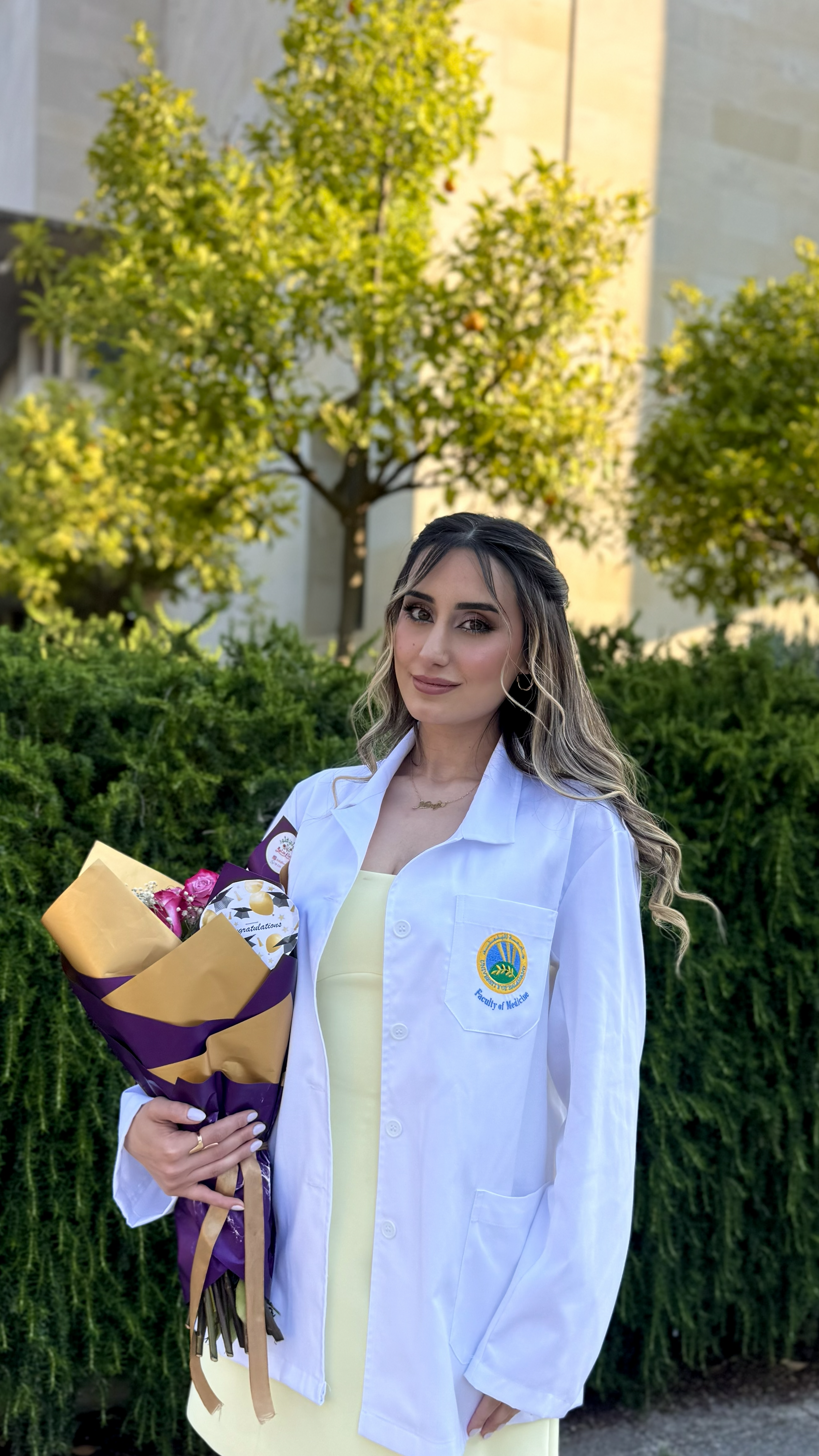
Seeing my friend lose his vision and feel so helpless at the same time made me realise why neurology is the specialty I belong in. It takes knowledge and sacrifice to have the courage to pursue a career in health care; there’s no doubt about that. However, it takes a certain kind of courage to encounter diseases that you break down to the absolute neuroanatomical and pathophysiologic cause of it, and yet still be able to acknowledge that you cannot always fix it. I found peace in that courage because like how I keep showing up for my friend, through every storm, neurology offers me the chance to look at the inevitable, deep in the eye and bargain all my time, effort, and heart, all in return of a better quality of life for my patients despite it all. Neurology is the field where the story behind the disease and the story of the person with the disease are as equally essential.

This realisation was further solidified in me during my exchange programme, when I met a young boy with Duchenne Muscular Dystrophy. Watching him interact with his family made me realise that neurology, unlike the brain, is not neatly contained in a fixed space. It overlaps with everything else, in medical field and in life as well. There he was a bright, full of life, young boy but his body was designed to fail him, yet his physicians still showed up offering the best options to improve his experience throughout life.

I sit back and watch how the physician is an extension of the boy’s journey, and I know that I want to offer that to my patients. So, while I wouldn’t be lying if I said my biggest dream as a neurologist would be to completely cure LHON, I also acknowledge that it is only an aspiration. Instead, realistically though equally challenging, my biggest goal as a neurologist would be to remain true to the values that neurology has always stood for: learning, adapting, and realising that Hebb’s law isn’t just about neurons.


Tony Alocious, UK, 3rd year medical student

It was my Thursday lunch break in high school, and you could find me in the same classroom my teacher let us borrow every week. We called ourselves ‘The Philosophy Club’, something I had accidentally founded during my time at high school. I was 17, there were only about 8-10 people as usual and I asked a question I had long grappled with: if the mind is what the brain does, then what happens to a person when the brain fails? What happens to their mind?

It was a question I borrowed from Descartes and Chalmers. I posed it as an intellectual exercise, but the question carried a personal weight for me because I had already seen what it looks like when the brain fails. I had seen it in my cousin.
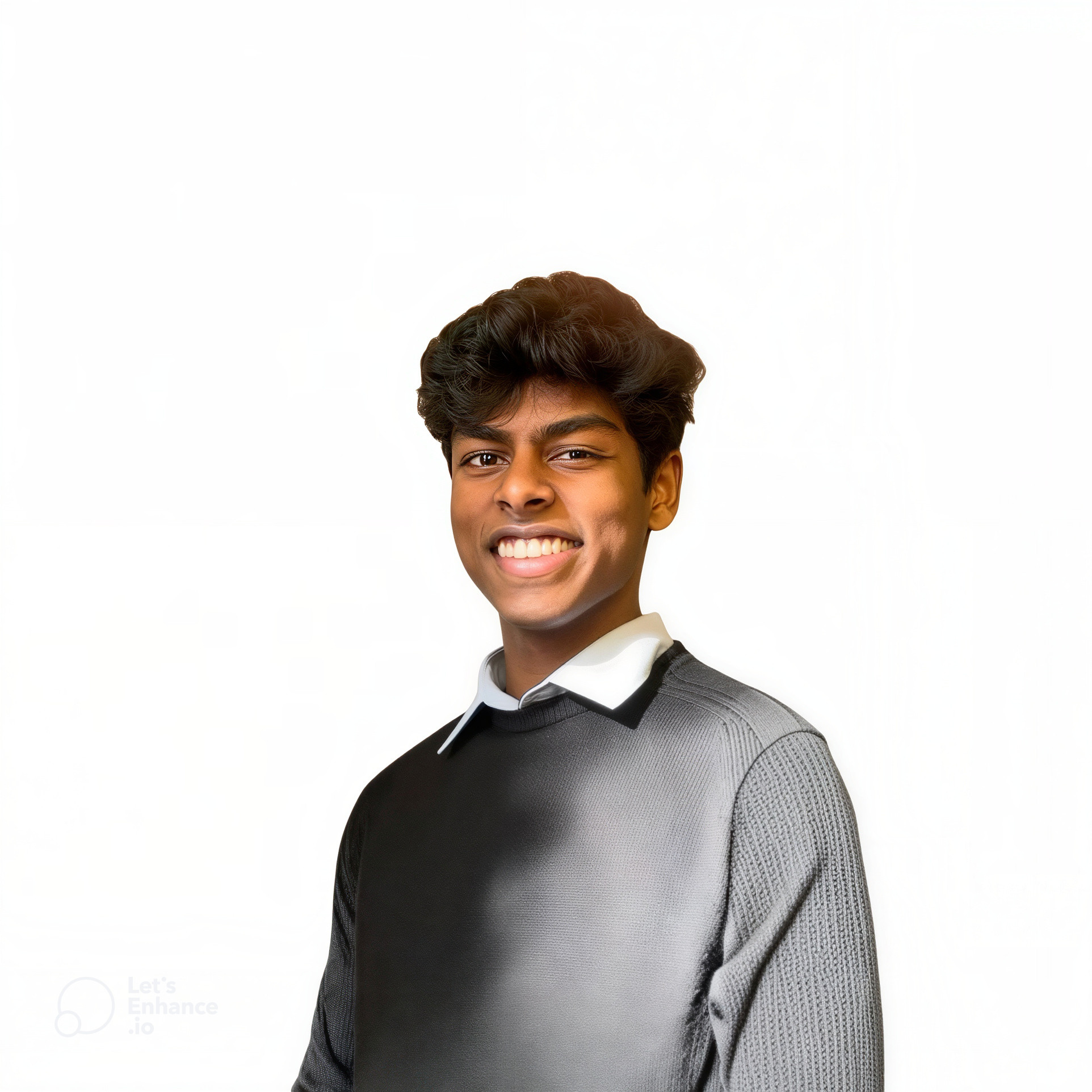
She was four and a half when I last played with her, during one of our family trips from England to India. A mitochondrial disease had been claiming her body for years. Her movements had become imprecise, and her speech were noises we did not understand. I was eleven and didn’t understand the science of what was happening to her, only that the girl beside me was trapped inside something I couldn’t see and couldn’t fix. We played anyway. When I called out her name loudly, her smile broadened and her face lit up as she recognised my voice. I held her hand and she gripped mine with a strength that surprised me.

She died at six when I was only thirteen. The call came in the early afternoon in a theme park hotel room. I distinctly remember my mother’s face and the particular silence that fills a room after the worst kind of news. We left that theme park early. I didn’t cry straight away. Instead, I thought, with the strange logic of a child, that someone somewhere should have been able to do something. That thought has stayed with me since.

Years later, in my third year of medical school, I found myself at the bedside of a patient with motor neurone disease. It was a routine assessment, a few questions, careful observation, nothing dramatic. But something in the stillness of that room brought back a feeling I thought I had buried. Here was a mind fully alive inside a body that was shutting down. In that patient’s eyes there was something that the disease hadn’t touched yet, an intelligence, a personhood. And I felt the same helplessness I had known as an eleven-year-old holding my cousin’s hand in a small town in southern India.

Growing up, I was certain I was going to become a philosopher, reading books and essays on mortality and the “hard problem” of consciousness, how subjective experience arises from physical matter. It felt like the deepest question anyone could ask. But philosophy on its own misses something crucial. When a mitochondrial disease tears through a child’s brain or when motor neurone disease takes someone’s voice, the person behind it still thinks and loves and wants to speak. The question had moved beyond philosophy. It was about a real person in a real bed who deserved better.

That is why I chose neurology. Not because I found an answer but because I realised that the question needed more than thinking. It needed doing.

What draws me specifically is where neuroscience meets technology: brain-computer interfaces. The idea that we can decode what a person’s neurons are trying to say and give them back the ability to communicate, to move, to live with some independence. It feels like the closest medicine has come to answering the question I once asked my philosophy club. If the mind is still there when the body fails, then our job is not to accept that silence. Our job is to find a way back to the person inside.

I don’t pretend neurotechnology will solve consciousness. But I think it can honour it. My goal as a future neurologist is to work where clinical care meets research and emerging technology, and to spend my career fighting for the patients whose minds are still very much present, even when their bodies have stopped answering.

My cousin couldn’t tell me what she was thinking during those afternoons we spent together. But her grip told me there was a presence fighting to be heard.

I want to spend my life making sure that kind of presence is never ignored.


Anastasiia Yevtushenko, Ukraine, 5th year student

Looking back, I can identify three moments that shaped my answer to ‘Why Neurology?’ It was not an overnight decision.

It all started in a university clinic.

“This is all my brain – it is destroying my life. What started as a slight tremor has turned into a devastating diagnosis. I can no longer manage everyday tasks the way I used to. People step away from me on public transport.”

I heard this from a young woman recently diagnosed with Parkinson’s disease. The diagnosis unsettled me, but even more did her attitude toward her own brain – as if it were an enemy. She spoke as though it had betrayed her. With each stage of progression, her perception of herself and of the world shifted. Every new motor or non-motor symptom – bradykinesia, sleep disturbances, anxiety revealed the disease once again, forcing her to redefine her life. I began wondering: can a neurologist become a guide in that unfamiliar world – without reducing care to checklists?
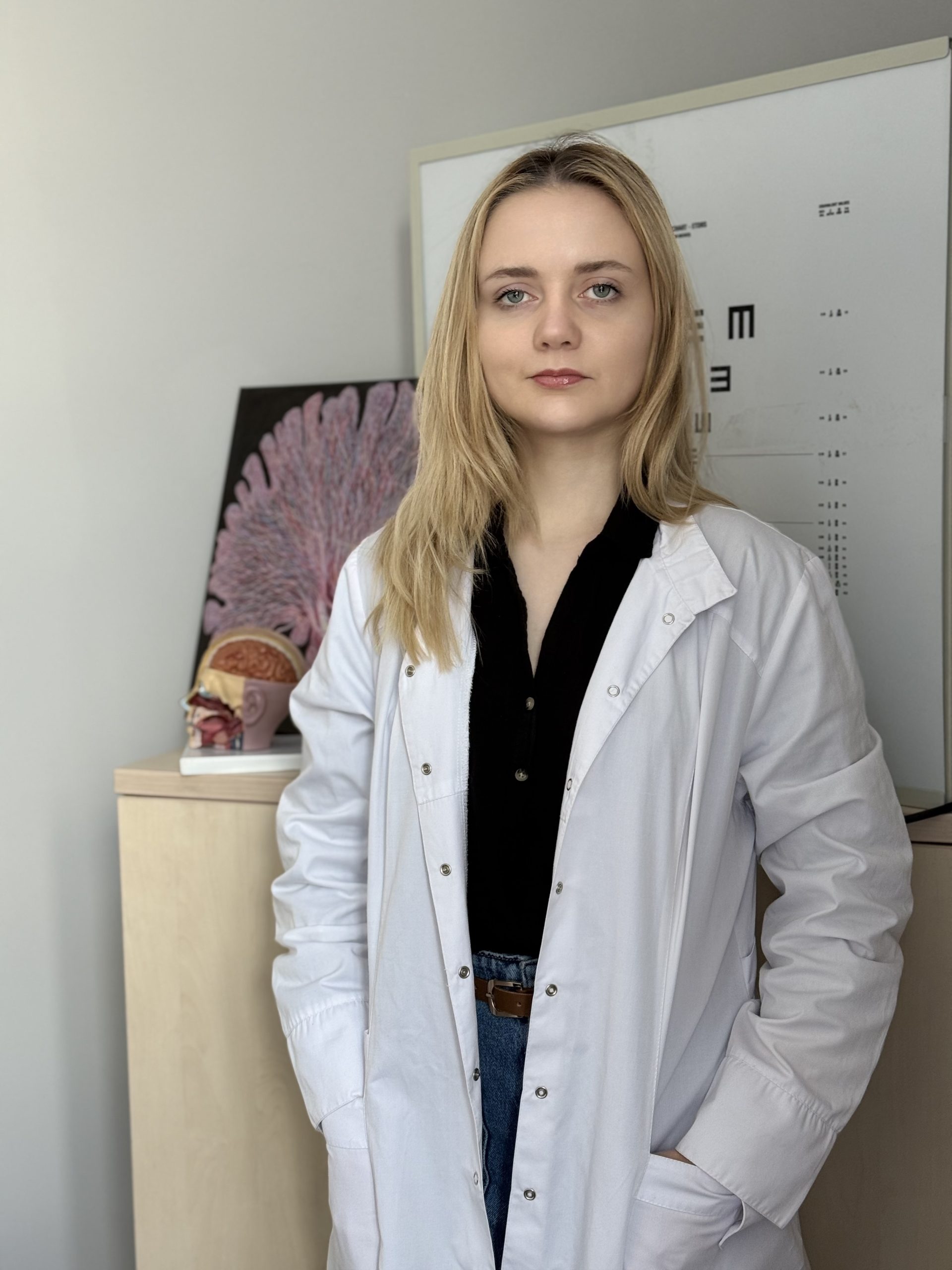
It was then that I understood my role should go beyond treating a disorder. I want to be the physician who explains, supports, and helps patients navigate changes. If we cannot yet fully protect patients from disease, we can change their perception.

Since then, I believe that tremor does not have to mean fear. It can remind us of the importance of a physician’s presence – one who sees not only the symptom, but the human. This was more than my first encounter with Parkinson’s disease – it showed me that neurology is about adapting to change.

Chess.

“I did not capture the pawn on h6. I was afraid. I would have played that move against another human being who can also feel fear. I had a beautiful idea: sacrificing the bishop for a powerful attack. But the machine, calculating millions of positions per second, would not allow me that advantage.”

He said it briefly, but I believe this is what he felt. That game ended in a draw, but the following match was lost. In the grandmaster’s defeat, humanity itself lost.

Chess may seem out of place, yet it has mattered. Since childhood, I have loved it; as a teenager I even considered going professional. Every time I face a similar position, I remember that game and think: what if not? What if my brain can ‘calculate’ 100 million positions per second too – perhaps more? I discard 90% of moves almost instantly. But how do I know? When did my brain already rule them out?

The more I reflect, the more I realise the human brain is far more than a calculating machine. It does not simply compute; it evaluates, filters, and decides in fractions of a second, balancing logic with intuition. It communicates through silent electrical impulses along white neural pathways – a language shaped by just two fundamental signals.

I may never fully understand the brain, but even one step closer to what feels so near yet so distant would give my life purpose.

My home.

The full realisation that neurology must become the path of my life came here, in Ukraine. I saw patients whose lives changed at once. A stroke. A trauma. A wound. And suddenly, the world is different. Today, a person is making plans; tomorrow, they are relearning how to speak, how to move, how to live within a new reality.

They arrive with different needs. Some require complex management, others long rehabilitation. And some need something far less technical, yet equally important – to be heard, to have someone calmly explain what is happening to their body.

In Ukraine, I became aware of how fragile our nervous system is. Chronic stress, sleepless nights, exhaustion, constant anticipation of danger – this affects the brain every day. Still, this composition of billions of neurons enables extraordinary resilience.

Its will is stronger than fear.

Its love is stronger than darkness.

Its faith is stronger than fatigue.

This paradox continues to fascinate me: the brain is profoundly vulnerable, yet it is also the foundation of adaptability. Within its networks, decisions are formed – to persist, to rebuild, to continue living when circumstances appear overwhelming.

I often reflect on my own brain, and how it sometimes shields me, softening the full awareness of destruction around me.

I play chess, I cry, I laugh, I love – each time I am reminded that all of this is made possible by the very organ I have chosen to study and advocate.”


Godswill Uzoechina, Nigeria, 5th year student

The death of my father was one too similar in low and middle-income countries (LMICs): poor health-seeking behaviours, lack of awareness, poor advocacy, significant out-of-pocket spending, and seeking professional help as a last resort.

My dad died of glioblastoma, a highly aggressive intracranial neoplasm. Of course, I did not know what it was called at that time. It was a diagnosis I came to realise after I took a formal course in neuroanatomy and neurophysiology during the third year of medical school. In fact, no formal diagnosis was ever made, not to the fault of the medical practitioners, because we did not seek out care until the condition worsened. From initial headaches to focal neurological deficits, we initially believed it was a spiritual attack, inflicted by a malevolent actor. In Nigeria, especially the south-eastern region, the cultural influence of supernatural beliefs makes such rationalisations common.
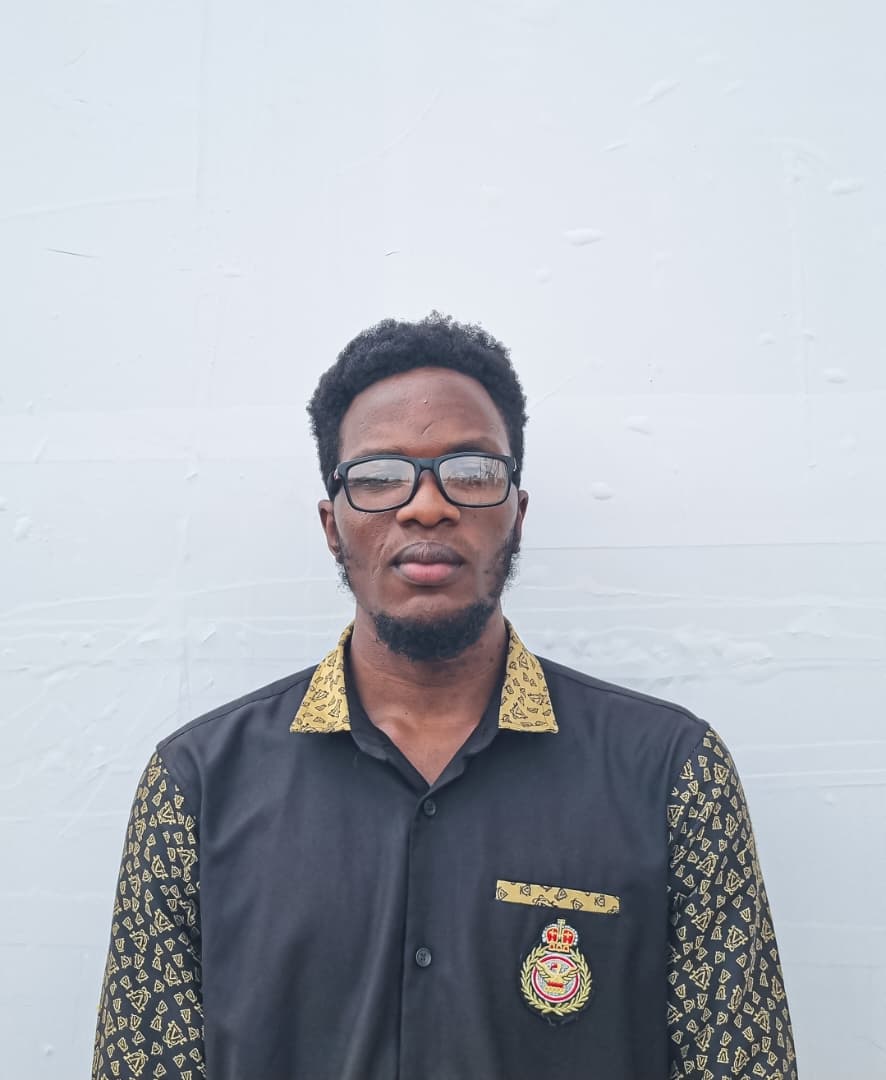
When the disease progressed to later stages, with frequent seizures, aphasia, extreme fatigue, weakness, and a profound loss of mobility, we finally sought medical care, only after exhausting prayer houses and herbal medications. By that time, it was tragically too late. The poor prognosis was worsened by what I considered complacency at the health care facility where we were admitted, compounded by the lack of CT and MRI scans, which meant that we had to constantly shuttle an already critically ill man from one referral centre to another.

This was a deeply unpleasant experience. Beyond the hefty financial burden imposed by out-of-pocket spending, my mother and I endured gross emotional labour, as we put our lives on hold to care for Dad. This experience left a profound impression on me, then a 12-year-old child. From that moment, I began to actively seek out resources, communities and mentors pertaining to neurology. I read lots of medical memoirs, from Henry Marsh to When Breath Becomes Air byPaul Kalanithi, a neurosurgeon whose experience with cancer resonated deeply with my own.

So, why neurology? This is because the health-seeking behaviour in my setting is poor and increases the burden of neurological diseases in Nigeria and across Africa. Because I have a strong desire to effect real changes in the Nigerian neurological healthcare system, particularly to ameliorate the mortality, morbidity and the profound circumstantial consequences of these diseases. I also aim to make sure that policies do not see statistics alone, recognising that behind each number are real-life families, humans, brothers, sisters, children, affected by the circumstances these diseases create. And because, as Paul Kalanithi said, I want to ceaselessly strive towards an asymptote: ensuring that many others do not relive my experience, even if perfection is unattainable. And finally, because I want to fill neurological research gaps in Nigeria and Africa, especially in emerging digital tools like machine learning and artificial intelligence.

My journey to neurology, to borrow from Herman Hesse, has not been a pleasant one; it is neither sweet nor harmonious, as invented stories are; it has the taste of nonsense and chaos, of madness and dreams, like the lives of all men who stop deceiving themselves. There have been rejections and failures, and moments of exasperation. Of course, there have been wins, but I am also cognizant of future mountains, especially the financial and arduous path from residency to becoming a neurologist.

Being onsite at the EAN Congress 2026 in Geneva will be a bold step in this journey: to present my abstract, to gain insights from global neurology, advancements, and innovations; to learn from peers, mentors and experts, to network and collaborate; and most importantly to gain access to a unique experience that is rarely available or accessible to someone to someone from an LMIC.

Thank you for this opportunity. I remain eternally grateful.


Evelina Sarkisian, Spain, 1st year medical student

The garden of neurology brings to the investigator captivating spectacles and incomparable artistic emotions. Neurons are some of the most fascinating cells in our body and as a Spanish neuroscientist and Nobel Prize winner Santiago Ramón y Cajal poetically described them: “neurons are the mysterious butterflies of our soul, whose fluttering wings could one day clarify the secret of mental health”. Within this nervous landscape there are a lot of unexplored areas and therefore immense potential for future discoveries. Consequently, there is something enthralling in encountering something previously unseen – these new forms appear as something that existed long before our observation and were patiently awaiting a worthy beholder of its beauty. These moments of discovery inspire wonder, yet demand humility, reminding us that scientific progress should not be regarded as a personal possession or an immutable dogma of the researcher, but rather as a continuous search and pursuit of understanding. Therefore, for me neurology is not only a field of study, but also a discipline of character as it cultivates patience, curiosity, humility and most importantly – empathy and responsibility as we work within the organ that shapes a person’s thoughts and sense of self. We must never forget that behind every scientific question there is a human story.

However, beyond the clinical encounter neurology spills into culture, identity and society. The same neural pathways that tremble in disease also compose music, construct societies and define how we relate to one another. In the 21st century with the rapid and constant explosion of brain science, do we find ourselves facing the construction of a new cultural framework? New cycle of culture is based on revamped conception of who we are and on new answers to the questions about what makes us feel like moral animals. This new culture probably will preside over the social changes that are coming, this time based on the knowledge of how our brain operates, the organ that produces all that we are and is the ultimate origin of how we behave.

For neurology this transformation is unavoidable. The epicentre of this new vision, that we call neuroculture, stems from recognition that human existence comes from a long process of chance, needs and readjustments that have lasted millions of years. It is now when we start to realize that the perceptual and intellectual elaborations of our brains are related to ancestral codes anchored and hidden in their depths, generation after generation. The brain is the creator and mirror of everything that happens. Nothing happens or exists in the human world that has not been filtered and elaborated by the brain. With this basic concept we come to a conclusion that the point of reference, from which true knowledge is created, no longer lies so much in the stimuli we perceive from the external world, as in the brain processes through which perceptions of that world are elaborated. Ramón y Cajal already mentioned it: “while our brain is an arcane, the Universe, a reflection of its structure, will also be a mystery”. This mystery is what passionately drives me into neurology: the possibility of exploring the organ through which humanity attempts to understand ourselves, explore our thoughts, identity and consciousness, while contributing to the care of those whose lives are shaped by their disruption.

On a final note, I would like to highlight that we have to cultivate our garden. For the neurologist the ideal is to solve the enigma of the self, contributing at the same time to clarify the formidable mystery that surrounds us. Nature is hostile to us because we do not know her: her cruelty represents revenge against our indifference. Listening to her intimate heartbeats with the fervour of passionate curiosity is equivalent to deciphering her secrets. In what more noble and humane enterprise can our intelligence be employed?


Why Neurology? Read some compelling answers from our EAN 2026 essay contest winners! was last modified: May 7th, 2026 by Simon Lee
Share this...
Share on facebook
Facebook
Share on twitter
Twitter
Share on linkedin
Linkedin
previous post
Obituary – Regina Katzenschlager (1964 – 2026)
next post
Open Call: Join the EAN Guideline Production Group

You may also like

EAN Congress 2026: Hands-On Courses & eHands-On Courses Open for Registration

April 17, 2026

EAN 2026 Congress Quiz – We Have the Winners!

March 19, 2026
12th Congress of the European Academy of Neurology celebrates with main headline that abstract submissions have hit record high!

EAN 2026 Hits New All-Time Abstract Submission Record

February 13, 2026

Apply now for the Student Teaser Fellowship 2026

February 1, 2026

The David Marsden Award 2026 – Apply now!

January 23, 2026

Neurology for Undergraduate Medical Students – New Online Course Gets Off to a Successful Start

January 13, 2026
Head and shoulders portrait photo of Irena Rektorova, in colourful dress

Executive Page: Get Ready to Join us for our 12th Congress in Geneva!

January 12, 2026

NeuroART Competition Returns for 2026, Celebrating Neurology Through Creativity

December 22, 2025

EAN 2026 Congress Quiz – Your Chance to Win Free Registration

December 9, 2025

Hit Headlines With Your EAN 2026 Abstract

December 1, 2025

Upcoming Events

May
6
Wed
all-day 12th European Stroke Organisatio...
12th European Stroke Organisatio...
May 6 – May 8 all-day
12th European Stroke Organisation Conference (ESOC) 2026
ESOC 2026 is Europe’s leading forum for stroke research and clinical care, bringing together the global stroke community to share the latest scientific developments and innovations. The conference will feature…
May
8
Fri
all-day 2026 MDS-ES Focused Workshop: Pa...
2026 MDS-ES Focused Workshop: Pa...
May 8 – May 10 all-day
2026 MDS-ES Focused Workshop: Parkinson's Disease Decoded: Genes, Environment, and the Epidemiological Challenge
  The MDS-ES Focused Workshop is an educational program organized by the European Section (ES) of the International Parkinson and Movement Disorder Society (MDS). These workshops are designed to bridge…
5:15 pm MDS-ES & EAN Joint Session: Clin...
MDS-ES & EAN Joint Session: Clin...
May 8 @ 5:15 pm – 7:30 pm
  The joint session will bring key leaders in the field, including Prof. Elena Moro (EAN President), Prof. Kailash Bhatia (EAN President-Elect), Irena Rektorova, (EAN Programme Committee Chair) and Alessandro…
May
15
Fri
all-day 14th International Symposium of ...
14th International Symposium of ...
May 15 – May 17 all-day
14th International Symposium of the Society for Research on the Cerebellum and Ataxias
  European neurologists are warmly invited to attend the 14th International Symposium of the Society for Research on the Cerebellum and Ataxias, taking place May 15–17, 2026, in Nicosia, Cyprus.…
all-day EAN Congress Masterclass 2026: R...
EAN Congress Masterclass 2026: R...
May 15 all-day
EAN Congress Masterclass 2026: Rare Neurological Diseases
  The EAN Congress Masterclass on Rare Neurological Diseases will take place on 15 May 2026 in Vienna. During this Masterclass, selected lectures previously presented at recent EAN Congresses will…
View Calendar

Keep in touch

Bluesky Facebook Instagram LinkedIn
Add to Home Screen
eanNews is a members service of the European Academy of Neurology https://www.ean.org

All content from January 2012 - June 2013 was published by EFNS; content from July 2013 - June 2014 by EFNS and ENS.

ISSN 2310-2934

Keep in touch

Bluesky Facebook Instagram LinkedIn

Archives

Pages

  • Privacy Policy
  • About us
  • Help

Back To Top