




Sweden, population 10 million, is the largest of the Nordic countries. The population is concentrated to the southern large-city areas, including the capital Stockholm (population 2 million) and the cities of Gothenburg and Malmö. Geographically, Sweden is the third largest country in the EU. The northern parts of the country extend above the artic circle, but the climate is relatively mild (average temperature about 0°C in January and 21°C in July) on account of the Gulf Stream carrying warmer Caribbean water to the region.!
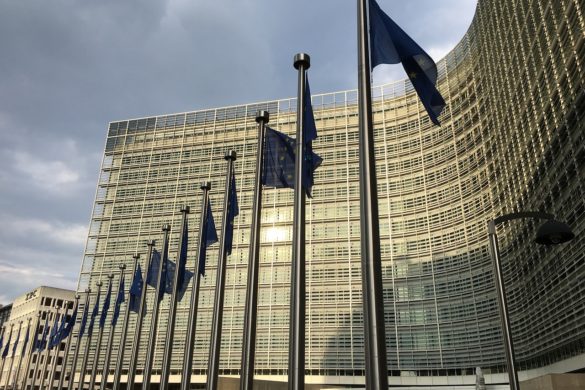
Biomedical Alliance in Europe Calls for Strong Health Funding in Next EC Multiannual Financial Framework
November 6, 2025
BioMed Alliance and 17 other civil society organisations call on policy makers to ensure that the next multiannual EU budget will be fit-for-purpose to address current and future health threats.
Latest Posts
-
-
Second dose of intravenous immunoglobulin for Guillain-Barre syndrome
-
Antiparanodal antibodies in CIDP.
-
Role of right frontal regions in cognition: evidence from intraoperative stimulation in awake people
-
Fluoroquinolone Use Linked to Higher Risk of Peripheral Neuropathy
-
EXTEND study: More evidence on thrombolysis beyond traditional time windows
-
A consensus review on the development of palliative care for patients with chronic and progressive neurological disease.
-
11th Zadar Summer School of Neurosonology and Stroke Management September 19th – 21st 2019, Zadar, Croatia The 2019 edition of Zadar Summer School of Neurosonology and Stroke Management will host the 6th International Training Course of the ESNCH with a… Continue Reading
-
Under the umbrella of the Women’s Brain Project (WBP), the second international Forum on Women’s Brain and Mental Health was held in Zurich (Switzerland) on June 8-9, 2019.
-
InterviewsScientific committee reportsEAN News
Introducing the Scientific Committee: Teia Kobulashvili
September 1, 2019The Scientific Committee is fully committed to a great mission: To increase and share the best clinical knowledge and the cutting-edge information from translational research in all neurological fields. Main actions are i) to facilitate exchanges and synergies with the Scientific Panels ii) to support the Guideline Production Group (update and diffusion of expertise and best clinical practice), iii) to interact positively with other scientific societies with reciprocal exchanges and liaise with the European Affairs sub-Committee to increase the awareness of Neurology in Europe. -
The EAN-Day in Estonia was organised in the 31st of May, 2019, in the Laulasmaa Conference Centre near Tallinn, next to the Annual Congress of the Estonian Ludvig Puusepp Society of Neurologists and Neurosurgeons. Three speakers from different European countries were invited, supported by the EAN , to lecture in topics by local needs: Professor Jean-Marc Leger an expert on peripheral neuropathies, from the University Hospital Pitié-Salpêtrière, Paris, France; Professor Nils Erik Gilhus from the Haukeland University Hospital, Bergen, Norway, whose field in myasthenia; and Professor Alessandro Padovani from Brescia, Italy, to lecture on different aspects of dementias.
-
To celebrate World Brain Day (July 22nd), the European Federation of Neurological Associations [EFNA] co-hosted events in four European capitals – Brussels, Bucharest, Dublin and Warsaw!
-
During 2018 EFNA continued to build on some of their ongoing projects – such as the MEP Interest Group on Brain, Mind and Pain and the Training Initiatives for Neurology Advocates.
-
European elections: developments in EU institutions Even though summer has arrived in Brussels, activities have not slowed down at EU level and there have been significant changes in leadership announced. Below is an overview of the main developments in the ‘EU Bubble’ following the EU Elections of last May
-
31 July 2019: Alzheimer Europe' adds new trials to its Clinical Trials Watch resource