

by Raja Sawaya, S. Daouk, W. Radwan, S. Hammoud
Introduction: Occipital lobe seizures are rare. They are usually the result of occipital lobe infarcts, haemorrhages, or metastatic tumours. They usually present with complex visual hallucinations, sensory or proprioceptive dysfunction, speech… Continue Reading
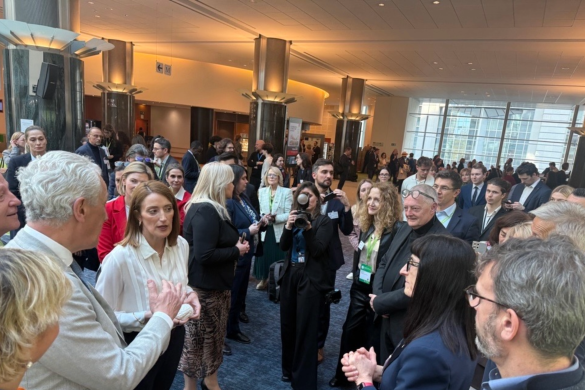
The European Parliament marked Brain Health Day: Prevention, Policy, Progress with a high‑level programme hosted by MEP Angelika Winzig, bringing renewed political attention to Europe’s urgent need for an integrated brain health strategy.
Latest Posts
-
-
by Vanja Basic Kes and Vida Demarin A 25-year-old female patient was admitted to our department because of deterioration of consciousness and showing verified intracerebral haemorrhagic zones on both sides of the brain on MSCT. (Figure 1)
At admission she… Continue Reading -
Education cornerForum
Creating a good questionnaire – tips and tricks for making multiple choice questions
 by Jan Kuks
Many neurologists are most enthusiastic about educating colleagues, medical students, paramedical staff etc. This may be because education and explanation are crucial for good patient-care. Education goes closely together with testing. Exams should be fair, reliable, valid… Continue Reading
by Jan Kuks
Many neurologists are most enthusiastic about educating colleagues, medical students, paramedical staff etc. This may be because education and explanation are crucial for good patient-care. Education goes closely together with testing. Exams should be fair, reliable, valid… Continue Reading -
 by Gian Luigi Lenzi
A few weeks ago I was confronted with a striking consideration on the burden of scientific production in neurosciences that by no means individuals can ever be able to process and digest. Prof. Henry Markram… Continue Reading
by Gian Luigi Lenzi
A few weeks ago I was confronted with a striking consideration on the burden of scientific production in neurosciences that by no means individuals can ever be able to process and digest. Prof. Henry Markram… Continue Reading -
Forum
Science from a Tweet: Elementary, my dear Watson, our behavior is influenced by our belly (but why then we got there so late?)
by Delia Lenzi Trillions of bacteria live in your gut and, taken as a whole, is what we call gut microbiota. The gut microbial is a moving organ, and has many and unexpected different roles. Studies show how it can… Continue Reading -
Preamble. The European Academy of Neurology (EAN) is founded on the initiative of the European Neurological Society (ENS) and the European Federation of Neurological Societies (EFNS), who both consider it essential to have one joint professional and scientific Neurology organisation… Continue Reading
-
Forum
Roadmap to Istanbul: Election of the EAN Board: Person Specifications and Job Descriptions of the EAN Board Officers
The EAN Board consists of the following 9 members: 1. President (elected)
2. Vice President (elected)
3. Secretary General (elected)
4. Treasurer (elected)
5. Chairperson Programme Committee (appointed)
6. Chairperson Scientific Committee (elected)
7. Chairperson Liaison Committee (elected)
8. Chairperson… Continue Reading -
Elections to the first Board of the European Academy of Neurology (EAN) are to be held on Tuesday June 3rd at its first General Assembly. Elections will be held under the supervision of the Election Organising Committee appointed by the… Continue Reading
-
Conflicts of interest (COI) in biomedical research are a matter of increasing interest, concern and debate and have led particularly over the last 10 years to a number of studies to analyse the problem and recommendations to avoid it. One of the last and most prominent recommendations is that of the Institute of Medicine in the US, in which COI were defined as follows: “a set of circumstances that creates a risk that professional judgement or actions regarding a primary interest will be unduly influenced by a secondary interest” (1).
-
In 2014, up to 5 scientific and up to 3 educational fellowships will be offered to support young European neurologists to carry out research projects in clinical and basic neurology. The objective is to support young and active neurologists wishing to expand their knowledge in neurology by working on scientific projects, and most of all, to study the practice of neurology in different countries, and thereby also creating new and international connections.
-
All e-learning activities are free-of-charge for EFNS members registered to www.efns.org! Answer all questions correctly and you will receive one hour of CME. European Journal of Neurology Every month one article is chosen for online learning. The following articles are… Continue Reading
-
eBrain is calling for authors to write an eBrain case report. Would you be able to help? The case report of the month is designed as an educational item, learners will progress through a series of pages deciding how to… Continue Reading
-
I have had the great honor of being one of the neurologists selected by the EFNS Training and Education Committee for the 2012 Scientific Fellowship. I have spent a year in the Neurology Department of the Justus-Liebig University in Giessen, Germany.
-
Other News
Three important steps to European Neurology harmonisation: core curriculum, visitation programme, European board examination
by Walter Struhal, Svein Ivar Mellgren and Wolfgang Grisold Although specialties in Europe have some common guidelines in most European countries neurologic training is practiced differently [1]. These differences might represent a “glass barrier” for residents and young neurologists… Continue Reading -
By communicating effectively with their patients, the doctor ensures more successful treatment outcomes. Improved doctor-patient communication leads to greater compliance in taking medication and enables more effective self-management for people with long-term chronic conditions. Having this in mind, the European… Continue Reading