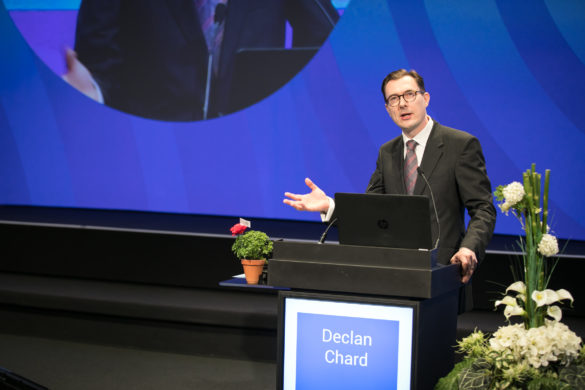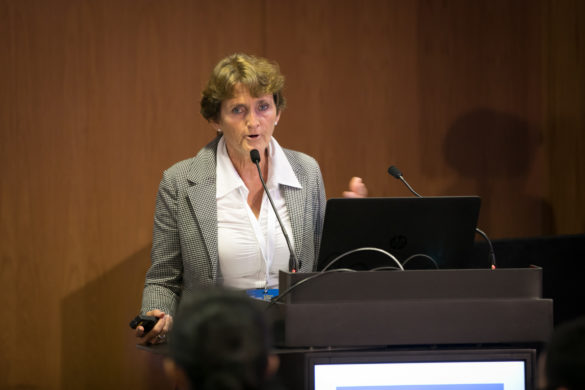
As in the previous years, EANpages asked EAN committee members, panel chairs, and invited speakers which session one should not miss at the upcoming congress in Lisbon 2018. Please find their answers below!
Category
EAN News
-
-
EAN Congress newsFeatured Slider
Neurological news from Portugal I – the land of the 4th EAN Congress – Egas Moniz and Angiography
January 9, 2018by Prof. Victor Oliveira, University of Lisboa, Portugal – Member of the Local Organising Committee for the 4th EAN Congress in Lisbon, Portugal Egas Moniz (1874-1955) was a Portuguese neurologist whose name is associated to the invention of angiography and… Continue Reading -
David B. Vodušek (DBV): When looking back at your long and varied career, can you tell us what was crucial for you to choose neurology as your specialty, and headache as your primary research field of interest? Jes Olesen (JO): Already as a medical student, I was interested in neurology. I thought at that time – and I still think so today – that the brain is by far the most interesting organ in a human being.
-
Dear EAN members, dear readers,
I would like to address you a few lines at the end of this year.
For EANpages, the 2017 has marked the second year since the launch of the new format of the EAN news… Continue Reading -
InterviewsEAN NewsTop Articles
Interview with William Carroll, President of the World Federation of Neurology
December 5, 2017David B Vodušek (DBV): In light of your long-standing experience in the world of neurology world-wide, what would your “diagnosis” be concerning its “state of art”? William Carroll (WC): What a good question to begin with. I would say my “diagnosis” is healthy and its prognosis is one of cautious optimism mixed with exciting opportunities and challenges. -
The past year has been a good year for neurology. With the major progress for neurological treatments and the aging of the population, neurology is becoming one of the key disciplines of medicine. Its organized bodies like the World Federation of Neurology, the regional societies in America, Asia and Europe as well as the specialty societies for stroke, movement disorders, dementia, multiple sclerosis and many other diseases are becoming the key drivers of this development.
-
Abstract Submission Deadline for the Lisbon Congress is only 6 weeks away.
Don’t miss you chance to be part of htis outstanidng event in European Neurology.
You can find details and guidelines on how to submit an abstract on the… Continue Reading -
The French Republic was born in 1793, fruit of a long and tormented political history. France is a constitutional republic with a semi presidential regimen, and it has around 67 million people. The French national statement is “to govern the nation, by the nation and for the nation”, which fits well with our motto: “liberté, égalité, fraternité”. The capital is Paris, and the official language is French. Paris and the French Riviera are both high touristic places.
-
Outcome of the elections of the new Executive During the November 22nd, Board meeting the elections for the EBC new Executive took place. The new Executive is composed as follows: • President Prof. Monica di Luca (FENS)
• 1st Vice… Continue Reading -
In the middle of autumn, in the picturesque and colourful atmosphere of Moldavian nature, the neurological community of the country had the chance to organize and participate in one of the most important and valuable scientific event of the Society… Continue Reading
-
Mondino Foundation Centenary Conference Disease Mechanisns and New Diagnostic and Therapeutic Trends in Neurology November 22nd – 23rd 2017, Pavia, Italy The Mondino Foundation is organising a high-profile scientific conference, aimed at physicians and researchers in the field of pre-clinical… Continue Reading
-
Executive PageFeatured Slider
President’s Page: The global burden of neurologic disease: A lesson to politicians and neurologists worldwide
November 3, 2017It is not new that human disease is imposing a burden on the sufferers and a challenge for the physician. While neurologists are having the privilege being physicians and have the single patient in our focus of attention, health economists take a different view. Their thinking is focusing on the burden of disease for the society and its economic implications. They look at the costs of disease in different terms. The classical measures for the burden of disease are the costs in terms of disability-adjusted life years (DALYs) which are defined as the sum of years of life lost due to the disease (YLLs) and years lived with the disease (YLDs) accounting for reduced life time with good quality of life due to the disability. Another important measure is the Socio-demographic Index (SDI) reflecting economic and educational development. There is big science behind all these calculations which I will not go into detail here. -
EAN NewsCountry of the MonthTop ArticlesFeatured Slider
Country of the month – Cyprus
November 1, 2017Situated at the north-eastern end of the Mediterranean basin, Cyprus is the third largest island in the region, with an area of 9,251 square kilometers (3,572 square miles). Cyprus is a small island with a long history and a rich culture that spans 10,000 years, making it one of the oldest civilizations in the Mediterranean area. Situated at the crossroads of three continents - Europe, Asia and Africa - the island’s unique geographic position has played an important part in its turbulent past since antiquity. The island was divided in 1974 following the Turkish invasion. -
InterviewsEAN NewsTop Articles
Interview with Professor Karin Sipido – Chair of European Commission – Scientific Panel for Health
November 1, 2017David B. Vodušek (DBV): The Scientific Panel for Health – SPH is an official and unique panel of the EC within H2020. Can you introduce the SPH to the readers of EAN and explain its tasks? Karin Sipido (KS): The European Commission’s Scientific Panel for Health is a science-led expert group based on the provisions of the Horizon2020 Specific Programme. -
Paper of the MonthEAN NewsFeatured Slider
A Round Table on the Paper of the month: Can beta-receptor agonists prevent PD?
November 1, 2017For November 2017, we have selected: Mittal S, Bjørnevik K, Im DS, et al. ß2-Adrenoreceptor is a regulator of the α-synuclein gene driving risk of Parkinson’s disease. Science 2017;140:2295-2305. Disturbed proteostasis of α-synuclein is now thought to play a critical role in the pathogenesis of Parkinson’s disease (PD). Physiological functions of this protein include synaptic transport as well as involvement in the metabolism of membrane phospholipids, and in the differentiation and survival of dopaminergic neurons.