On 17 March 2026, the European Academy of Neurology (EAN) brought together 42 presidents and representatives of national neurological societies (NNS) from across Europe and beyond for the Enhancing Neurology in Europe and Beyond meeting in Brussels. The event marked a major milestone in the EAN’s strategic efforts to shape the future of neurology and strengthen collaboration at both European and national levels.
A shared vision for the future of neurology
The Enhancing Neurology initiative was launched to respond to growing neurological needs across Europe, driven by demographic change, increasing disease burden, workforce challenges, and rapid scientific and technological developments. The initiative aims to define common priorities and translate them into concrete action over the next decade at European and national level.
During the Brussels meeting, presidents of the NNS (EAN full and corresponding Institutional Member societies) and EAN Board members met all day to discuss shared challenges and align on a common strategic direction. The discussions built on extensive preparatory work, including surveys and dedicated workshops held within EAN forums, and focused on turning shared priorities into practical, implementable measures at national and European level.
The Brussels’ Neurology Declaration
A central outcome of the meeting was the signing of the Brussels’ Neurology Declaration, a joint declaration in which participating societies formally committed to strengthening neurology across Europe through coordinated and long-term action.
Through the Declaration, signatories pledged to work collectively on the implementation of a European Neurology Strategic Plan and to advocate for neurology as a core pillar of public health policy. The document sets out seven priority areas for the coming decade, reflecting both clinical and systemic needs in neurology:
1. To promote brain health for all. Prioritise brain health in public health policies and health systems, recognising brain health as a key determinant of individual well-being, societal resilience, and sustainable health systems.
2. To support equal treatment access and funding. Advocate and facilitate access to available therapies all across Europe and adequate funding.
3. To foster prevention and improve the overall care for neurological disorders. Promote early diagnosis, equitable access to high-quality neurological care, innovative treatments, rehabilitation, and long-term support for the millions of people living with neurological conditions.
4. To strengthen the neurology workforce. Support education, training, mentorship, and professional development of present and future generations of neurologists, ensuring a resilient and highly skilled neurological workforce across Europe.
5. To boost interventional neurology. Address the need of widely available prompt and specialised intervention of neurovascular disorders
6. To advance research and innovation. Encourage investment in neuroscience and neurology research, including translational science, clinical trials, digital technologies, and precision medicine, to accelerate discoveries that improve patient outcomes.
7. To integrate new technologies and AI in neurology practice
Support the use of new technologies, AI and digital tools to advance neurology care, preserving the value of human relationship and care.
The Declaration sends a strong, unified message: neurology must be prioritised within health systems, research agendas, and policy discussions if Europe is to respond effectively to the growing burden of neurological disease.
EAN President Elena Moro emphasised that the Declaration represents both a political and professional commitment: a pledge to work together across borders and generations to improve neurological care, education, and research. The event was also seen as an important signal to early-career neurologists, demonstrating that the neurological community is united in shaping the future of the field.
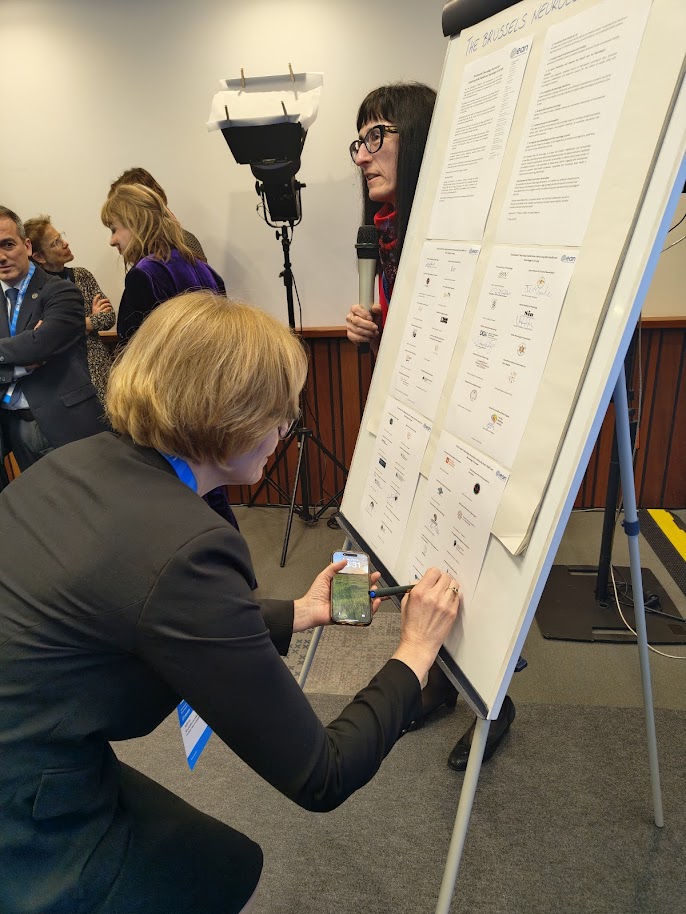
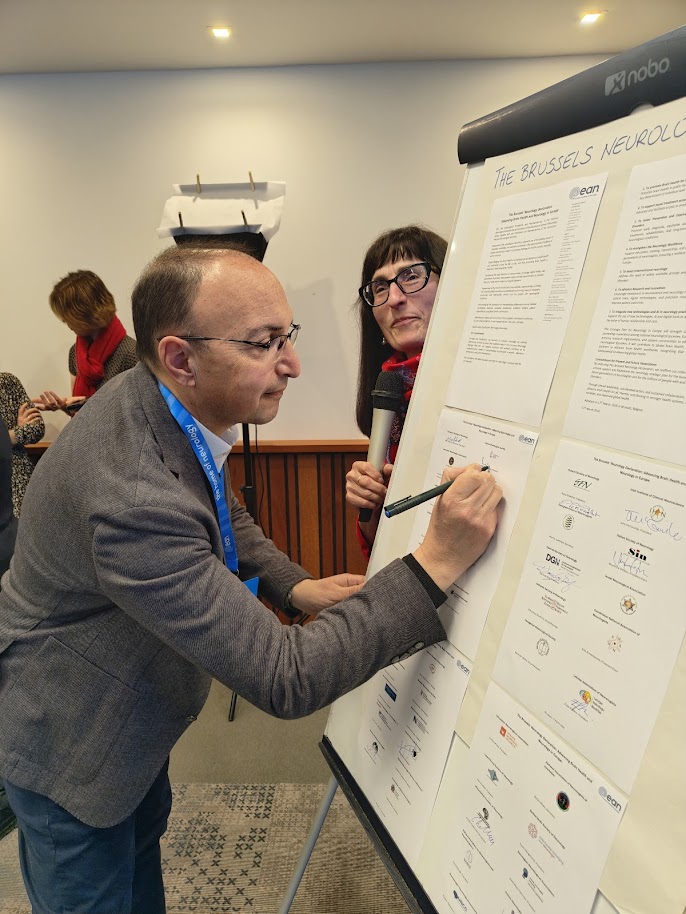
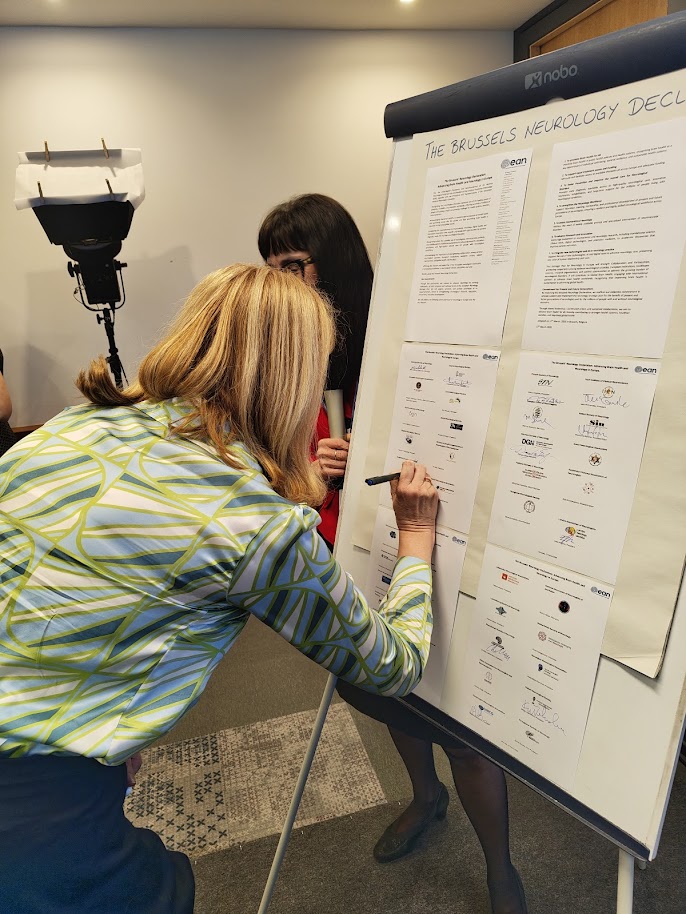
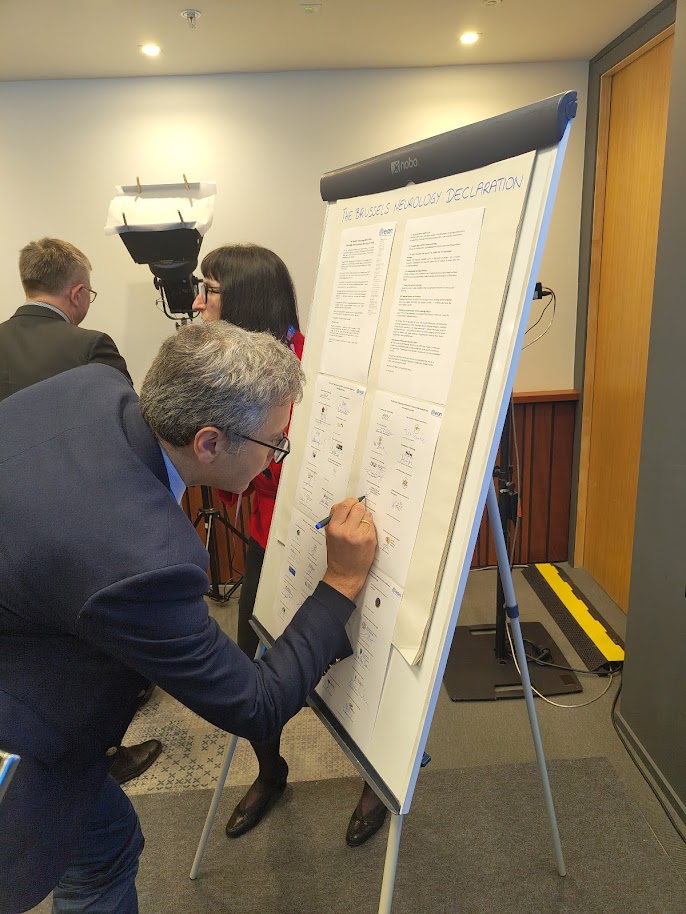
Representatives of national neurological societies signing the Brussels Neurology Declaration
Presentations and speakers
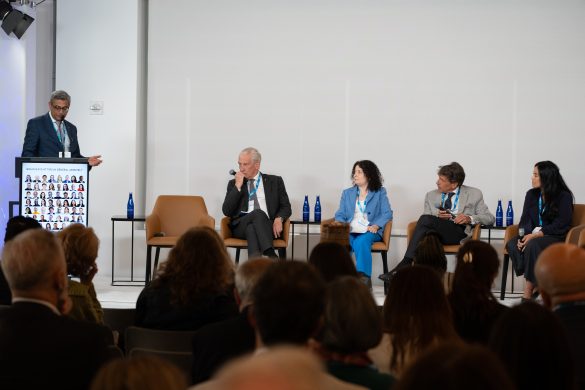
Elena Moro, EAN President, kicked off the event with an outline of the agenda for the day as well as an overview of the Enhancing Neurology project. She was then followed by ten other speakers with presentations relating to the seven priority areas outlined within the Declaration. The presentations were grouped into three categories: Care and Intervention, Advocacy and Training, and Innovation and Future. Discussion followed the conclusion of each category.
Example of national priorities put into action: Polish Society of Neurology
Alina Kułakowska, President of the Polish Society of Neurology, gave a presentation on how identifying neurology as a national priority impacted outcomes in Poland. Key achievements included the founding of the National Council for Neurology in 2022, which has designated neurology as a priority medical specialty and developed a new reimbursement tariff system for neurological hospital procedures. Additionally, the Coalition for Brain Health was established in March 2025, and the Ministry of Health has designated ‘Healthy Heart, Healthy Brain’ as one of three healthcare priorities.
Care and Intervention
Public Health – implementing priorities
Sebastian Winter, from the World Health Organization’s (WHO) Brain Health Unit, discussed the global burden of neurological disorders, stressing that without intervention, its impacts on health, social, and economic areas will continue to grow. Countries are urged to supply critical data to help measure progress on the iGAP.
Investing in leadership
Vanessa Delacourt, CEO of Schelstraete Delacourt, presented on the brain economy, a framework that suggests our brains are the primary resource driving future of our society. National Neurological Societies and their members can play an extremely important role in promoting the further development of environments and leaderships that are conducive to generating brain power.
Current panorama of the interventional neurovascular programmes in Europe
Simona Sacco, European Stroke Organisation (ESO) President, presented on how, while mechanical thrombectomy is one of the most effective treatments available for strokes today, only about 1.9% of eligible patients receive the treatment due to a shortage of trained specialists and limited access to training pathways. In order to expand access to this treatment, several structural barriers must be addressed.
Advocacy and Training
Successful implementation of iGAP on a national level
Tarun Dua, from the Brain Health Unit at WHO Europe, posed the question: ‘What kind of workforce is actually needed to address the burden of neurological disorders?’ It is difficult without concrete data to understand what is working, and what isn’t. In addition to gathering more data and using it to guide decisions, working toward identifying system bottlenecks, increasing workforce capacity, and improving coordination between stakeholders can help address current shortcomings in neurological care.
Harmonisation of training in Europe
Nathalie Nasr, EAN Education Committee Chair, discussed how to progress the harmonisation of neurology curricula across Europe without compromising training standards. The EAN is currently working to better understand what young neurology professionals need in order to pursue and be supported in their academic careers. Leveraging the eanCampus as a central training resource, thoughtfully integrating AI into medical practice and education, and strengthening current academic career pathways were suggested as next steps.
Training neurologists and students in a European university: the University of Cologne Strategy
Gereon Fink, Dean University of Cologne and EAN Scientific Committee Chair, shared the ‘Cologne Model’ of training neurologists. This strategy reinforces profound knowledge and practical skills while also emphasising empathy, professionalism, and enthusiasm. In the last five years, this programme has resulted in the publication of more than 750 scientific papers with a cumulative impact factor of over 5,000 points, graduated 41 doctoral students, and habilitated seven new lecturers.
Innovation and Future
‘Innovation in neurology/medicine: how can industry and clinicians work together?’
Olga Sánchez-Soliño, Global Neuroscience Therapeutic Area Head within the Global Medical Affairs department at AbbVie, discussed how establishing clear objectives with stakeholders at every level, improving the potential for early diagnosis of disorders, and developing safe and effective biomarkers and digital wearables can improve the ways in which industry and clinicians work together despite current challenges.
Integration of artificial intelligence in medicine
Monica Moroni, from the Data Science for Health Unit at Fondazione Bruno Kessler in Trento, Italy, presented on the landscape of AI in neurological research from 2019 to 2024. While there are several shortcomings in the available research, such as limited reproducibility and lack of ability to generalise results across populations, there is an important opportunity moving forward to develop new guidelines.
The growing impact of Neurotechnology: how to navigate
Laura Bernáz Tímon of Neurotechnology, Centre for Future Generations, discussed the exciting potential for consumer and medical-grade wearables to co-evolve. However, caution must be taken, as there are significant evidence gaps and challenges in consumer neurotechnology despite the potential opportunities to support healthcare in the future.
With Enhancing Neurology, the EAN reinforces its commitment to collaboration and advocacy, working together to ensure that neurology is equipped to meet Europe’s health challenges, today and in the decade ahead.
EAN Fact Sheets
As part of the Enhancing Neurology event at the European Parliament, EAN Fact Sheets were also made available to the attending presidents and delegates. Each delegate received the Fact Sheet for their respective country, providing a concise overview of key epidemiological, economic, and workforce indicators. A new updated version will be published during the EAN Congress 2026 in Geneva.
Beyond their informational value, these Fact Sheets are designed to be strategic tools for advocacy and health policy engagement. They consolidate robust evidence from three major EAN initiatives: the Burden of Neurological Diseases in Europe study, providing data on prevalence, mortality, disability-adjusted life years (DALYs), years of life lost (YLLs), and years lived with disability (YLDs); the COIN-Eu project, which quantifies direct health care costs, informal care costs, and indirect costs; and the EAN NNS survey, which maps the neurological workforce across Europe. By translating these multidimensional datasets into clear, country-specific insights, the Fact Sheets empower national neurological societies to engage more effectively with policymakers, highlight unmet needs in neurological care, and strengthen the case for more robust health system responses to the growing burden of neurological disease across Europe.
With Enhancing Neurology, the EAN reinforces its commitment to collaboration and advocacy, working together to ensure that neurology is equipped to meet Europe’s health challenges, today and in the decade ahead.