by Alicia Gonzalez Martinez, Resident & Research Fellows Section Chair
On 21-22 March 2026, the EAN Resident & Research Fellow Section (RRFS) Representatives Network Meeting convened young neurologists and researchers from across Europe to review ongoing initiatives and shape future efforts within the European Academy of Neurology (EAN). The RRFS represents approximately 2,000 members, including neurology residents, PhD students, and research fellows.
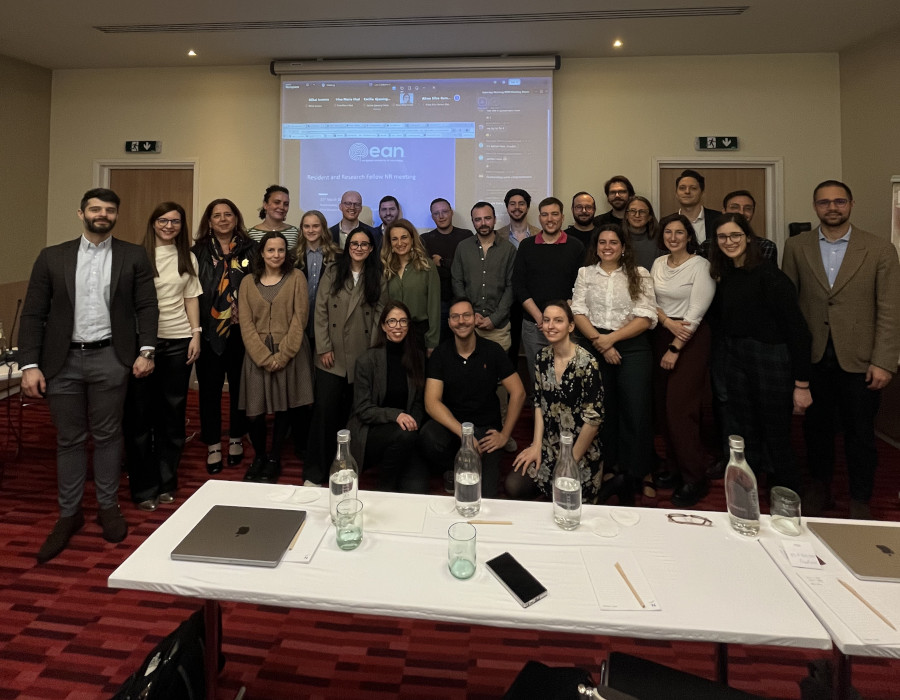
The meeting was warmly hosted in Bucharest, Romania, by the Romanian Society of Neurology in collaboration with the RRFS Office. Over two days, 21 in-person and eight online participants engaged in a structured programme of sessions focused on defining strategic priorities of the RRFS.
The programme was opened by Assoc. Prof. Cristina Aura Panea the current Chair of the Romanian Neurological Society, followed by a welcome from EAN President, Prof. Elena Moro, and commenced with sessions dedicated to RRFS educational initiatives, including updates on the recently launched Junior Reviewers Programme and discussions on the development of new opportunities accessible to all RRFS members such as career awards. These sessions highlighted RRFS and EAN efforts to support equitable access for career development and academic excellence for young European neurologists.
A dedicated session on public health and national policy showcased the Romanian experience of Prof. Tiu, Dr Mihai Ionescu and Dr Bildaru in developing the neurointerventional training career pathway for neurologists and a national plan for stroke management, providing an inspiring example of how national initiatives can contribute to advancing neurological care and training and how a young neurologist might start contributing to health policy.
The Chair of the RRFS, Alicia Gonzalez-Martinez, who attended the recent Brain Health Day events in Brussels, Belgium, provided an update on the developments at the European level, including discussions on the Brussels Neurology Declaration and the growing role of new technologies and artificial intelligence in clinical practice. These discussions also focused on the active involvement of the RRFS in shaping future priorities in neurology at a European level.
The second day hosted a strategic RRFS forum to define priorities for the upcoming year, including the importance of ensuring equitable access to educational opportunities and supporting the inclusion of underrepresented countries across Europe.
The meeting ended with a joint planning session involving RRFS representatives, the Romanian Society of Neurology, and the EAN Board, resulting in a coordinated plan to further strengthen collaboration, education, and inclusivity within the European neurological community.
The Bucharest meeting further highlighted the RRFS as a vibrant platform fostering collaboration, innovation, and leadership among the next generation of neurologists.