by Professor Elena R. Lebedeva, MD, DMSc, FEAN, Ural State Medical University and International Headache Centre “Europe–Asia,” Yekaterinburg, Russia
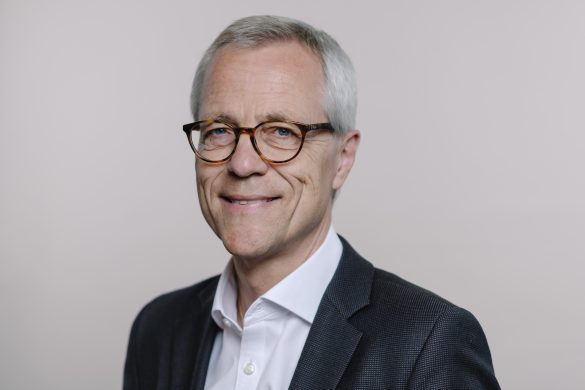
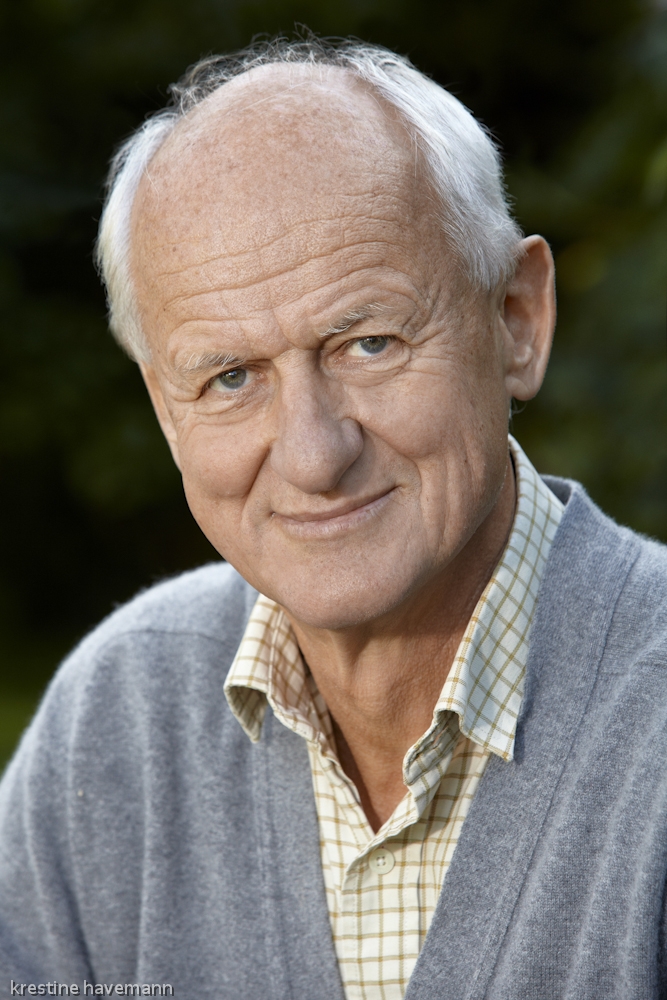
The founder of the European Journal of Neurology, of the European Brain Council and of the International Classification of Headache Disorders — the man who gave headache a common language, trained sixty doctoral students and taught European neurology to argue its case in Brussels — turns 85 on 9 September 2026.
Jes Olesen was born in Hobro, a small town in Jutland, far from Copenhagen, Denmark. His father was a general practitioner in solo practice, on duty day and night; his mother was one of Denmark’s first female dentists. He remembers a childhood spent almost entirely outdoors, in gangs of boys who disappeared into the forest in the morning and came back at dusk. “It was a very safe, very happy childhood, with loving parents,” he says. “A very good background to start from.”
Medicine came late, at the very end of high school. History tempted him, but he felt it would keep him among books rather than people; engineering appealed to the experimenter in him. After medicine, Jes Olesen chose neurology as his specialty. “It is about the brain,” he says, “and you also need a certain psychological skill to do it well”.
Making migraine visible
Jes Olesen’s doctoral work was on human brain blood flow, using equipment that could, for the first time in the world, measure flow in thirty-five separate channels across the brain. He then made a deliberate choice that shaped the rest of his career: to apply that method to a common disease rather than a rare one. Migraine, he decided, fitted perfectly — though “at the time nobody knew whether it would be a complete failure or a success”.
It was a success. In the early 1980s Professor Olesen’s group captured changes in cerebral blood flow resembling cortical spreading depression during the development of a migraine aura. Until then, nothing measurable had been demonstrated during an attack. Some of those patients, he recalls, had been told by their doctors that they were suffering from hysteria — “and now we could show that it was a very peculiar sort of ‘hysteria’ indeed, one in which the brain was changing its blood flow and blood volume dramatically”. The finding did much to move migraine into neurobiology.
Olesen’s second breakthrough was methodological: a human provocation model, deliberately inducing the disease in order to understand it. “In hindsight it seems simple,” he says, “yet it has scarcely been done in any other disease”. The model revealed the roles of nitric oxide, calcitonin gene-related peptide (CGRP) and PACAP — and CGRP has since become one of the most successful drug targets in modern neurology. With Peer Tfelt-Hansen, he also pioneered the methodology of migraine drug trials — work begun in 1980 that continues today through the International Headache Society’s clinical trials committee.
Teaching neurology to define a headache
The International Classification of Headache Disorders was Jes Olesen’s own idea, born of an uncomfortable realisation. “I had seen a great many patients during acute attacks, and at some point I realised that I did not actually know how to define migraine — there was no agreed way to do it”. He proposed the project at a congress; the response, he says with amusement, was “Yes, yes, good idea — you do it”, with no instructions of any kind.
He studied how psychiatry had solved the same problem in DSM-III, brought its architects in to tutor his committee, and recruited the most respected names in headache so that the result would be accepted. The first edition appeared in 1988, after three years of work, physical meetings and letters exchanged by ordinary post. Two principles have survived all three editions: a hierarchical structure, and explicit diagnostic criteria for every entity — “because only explicit criteria make it possible to minimise diagnostic variability across borders and make studies internationally acceptable”.
Jes Olesen’s view of the future is conservative in the best sense. After three editions, “every word has been weighed as if on a scale”; change should come slowly and only from published evidence, “never simply because the members of a new committee happen to think something ought to be different”.
A neurologist who was not afraid of politics
EAN members owe him a particular debt. Jes Olesen helped create the European Federation of Neurological Societies (EFNS), and founded the European Journal of Neurology while serving as vice-president of the EFNS; the journal passed to the EAN during the merger with the ENS. Realising that neuroscience needed a single voice in Brussels, he then founded the European Brain Council (EBC), uniting neurology, psychiatry, neurosurgery, basic neuroscience and — crucially — patient organisations. The result was roughly a twentyfold increase in the resources allocated to brain research in the EU.
Jes Olesen is unapologetic about that work. “Some people even called me a political neurologist rather than a scientist,” he says. “Well — I received the Brain Prize, which is the highest honour in our field, so perhaps my research is not so bad after all”. Anyone claiming to stand above politics, he adds, is simply mistaken: even securing a room or a collaborator in your own hospital is politics. He has also endowed prizes for the best paper in Cephalalgia and in the European Journal of Neurology — both journals he helped bring into being.
“You cannot wear the brain down”
Asked about brain health, he calls “neuroscience” the old name for brain research: “brain research” and “brain diseases” are deliberately new language, chosen to make the message clear to the public and to those who allocate funding. Olesen’s own prescription is short: keep the brain active. “The more you use the brain, the better it becomes. In this it is the opposite of almost everything else, which wears down with use — you cannot wear the brain down. You can only improve it by using it”.
Sixty scientists, and a habit of sharing
Prof. Jes Olesen has supervised some sixty scientists through their PhDs — the achievement of which he is proudest — and his advice to them is unusually candid about self-doubt: write everything down first, however rough, then revise at least six times. “You always feel that what you have done is worth nothing,” he says. The same generosity shapes his view of collaboration. No group, he argues, ever commands all the methods it needs, and centres in countries where research is difficult can still contribute a great deal — by assembling the large patient series on which classification research depends. It is a view that has made his projects genuinely international, and it explains why so many of us across Europe and beyond count Jes Olesen as our teacher.
There is one more thing that no bibliography records: Jes’s optimism. Colleagues have long enjoyed the happy coincidence that his first name, in Danish, sounds like the English ‘Yes’ — and it suits him exactly. Where others saw an obstacle — a disease no one could measure, a classification no one had written, a continent whose neurologists had no common voice — Jes Olesen saw something worth trying. The answer, more often than not, was yes.
And Jes Olesen keeps returning to the same word: science, for him, is like a game of chess or bridge, “a great deal of fun,” with the difference that it ends by helping someone to a better treatment. Few neurologists can say that they changed how an entire disease is defined, understood and treated; Jes Olesen did all three. On behalf of the European neurological community, we wish Prof. Jes Olesen a very happy 85th Birthday, and health and happiness for many more years of fruitful life.