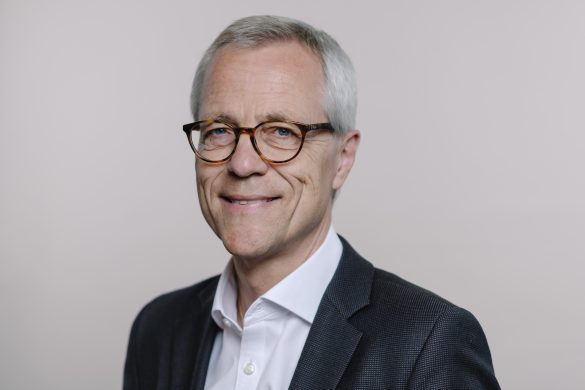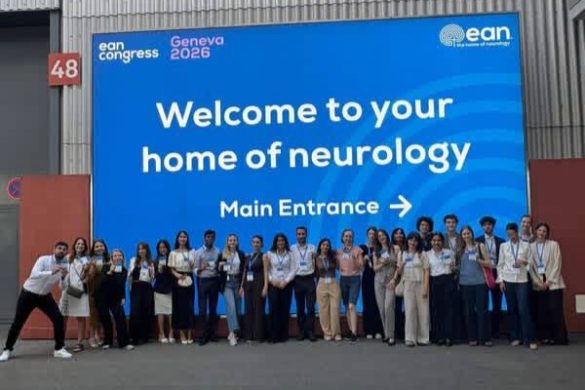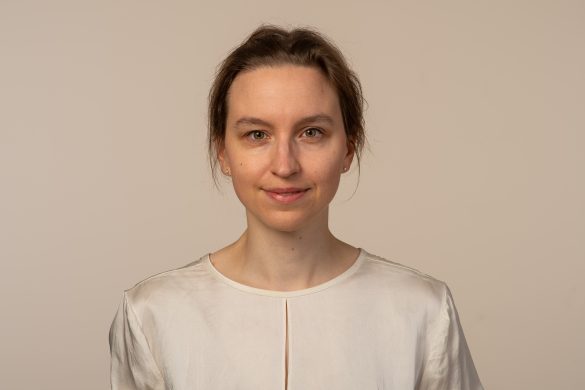
Prof. Kailash Bhatia, Professor of Clinical Neurology at the Department of Clinical and Movement Neuroscience of the Institute of Neurology, UCL, Queen Square, London, officially took on the presidency of the European Academy of Neurology (EAN), on Tuesday, 30 June 2026, the final day of the 12th Annual Congress of the European Academy of Neurology in Geneva, Switzerland.
As the congress drew to a close, Bhatia, who has occupied the role of President-Elect on the EAN Board for the past two years, joined Conny Lee and Prof. Thomas Berger in the EAN TV studio for the EAN TV Farewell Show, taking the opportunity to discuss a successful congress, the role of AI in neurology, his plans as president, and a pivotal moment in his career.
Asked about the main areas of focus as the incoming EAN President, Bhatia noted the importance of respecting the work already done by his predecessors but also identified two clear priority areas where he would like the EAN to make progress under his leadership: brain health and inequity.
The Brain Health Mission, launched by the EAN in 2023, has been a successful initiative, spawning numerous projects and outreach efforts and attracting many partners from within the neurology community. Bhatia sees scope to build on this success and push towards establishing an even broader support base, reaching into the mainstream.
“One of the difficulties I perceive with the brain health mission is that we need to bring this to the attention of the ‘lay neurologist’, the day-to-day neurologist, to the GP, to the others,” said Bhatia. “Because until they are invested in this, we may sit in our ivory towers and shout as much as we like, but this has to come down to the mainstream. The ‘lay neurologists’ need to realise that they are stakeholders already and have a major role”.
He singled out the importance of brain health starting from the beginning, both in terms of prevention, and in terms of educating people at an early age, indicating that this is where investment should be aimed. Referring to the success of the Brain Health School Challenge in spreading the Brain Health Mission’s message, he advocated communicating directly with children.
“Look after your brain … sleep well, exercise, avoid injury, etc.,” he said. “We need to do something about these things at a very early level, and education is the key; towards our neurologists, to our people who are making policy, but also downstream there where it all starts, in the young, in the children”.
The second priority Bhatia raised was Inequity, which poses a quite different challenge. He noted the lack of “a level playing field” among the countries of Europe, with some lacking the access to advanced therapies that others take for granted. For example with regard to Parkinson’s disease, advanced therapies and advanced modes of deep brain stimulation are only variably available. This is also true for immune and genetic testing, and genetic counselling – to name a handful of examples that are available to differing degrees to different national populations.
Bhatia acknowledged the difficulty of tackling this complex issue, which must begin with obtaining a complete picture of the various disparities.
“Firstly, we need to know the scope of the problem because we don’t have clear information about that. So, one of the things I want to do in that context is to see if we can get some more information, and then how are we going to address that would be the next issue”.
Talk then turned to the next generation of neurologists (RRFS ) and what advice Bhatia would offer to them and the future leaders of the EAN community, yielding a highly encouraging answer.
“I’m thinking that we should learn from them. They are showing us the way already. I see these people working together, cooperating, really energised to deliver things, which they do so well. So, I think we should be learning from them rather than advising”.
He went on to emphasise the value of mentoring and the importance of making neurology – and particularly academic neurology – attractive to young people.
Finally, Bhatia was asked to think of a moment in his career that changed the way he looked at neurology and medicine. He recalled an incident from his early days in medicine, before specialising in neurology, when a female patient was complaining of abdominal pain, but the attending staff perhaps believed the complaints to be exaggerated.
“It turned out that she actually had an abdominal aneurysm. This was eventually picked up, and she was saved. And the thing which came out to me from that was ‘listen to your patient’. Don’t just hear them, listen to them and believe in them. That’s something I would still tell my fellows. I tell my residents. They are telling you the story. If you hear it properly, then many things can be achieved by listening to your patient”.
Watch the full EAN TV interview on our Vimeo channel, or via the player above.