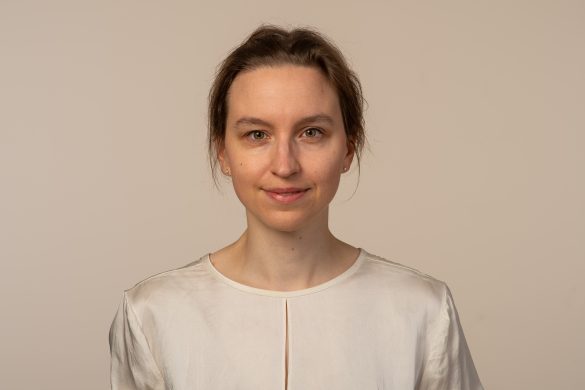
Gianmarco Abbadessa, Naples, Italy
Hosting department: The UK Multiple Sclerosis Tissue Bank, Department of Brain Sciences, Imperial College London
Supervisor: Prof. Richard Nicholas
I am deeply grateful for the opportunity to participate in and receive the training provided by the one-year EAN Research Fellowship. The results of my collaboration with the UK Multiple Sclerosis Tissue Bank, within the Department of Brain Sciences at Imperial College London, have proven to be both significant and promising in the field of multiple sclerosis (MS).
I had the privilege of working in a prestigious department alongside the UK Multiple Sclerosis Tissue Bank, which is home to some of the most experienced researchers in neuropathology, particularly in MS. My supervisor, Prof. Richard Nicholas, has been an exceptional mentor, providing not only strong research leadership but also invaluable understanding and support.
I am especially pleased with the role I was assigned within the team, as it enabled me to immerse myself in bioinformatics as it applies to neuropathology research in MS. I was actively involved in projects that explored the genomic and transcriptomic profiles of MS neuropathology. Additionally, under the guidance of my supervisor, I had the opportunity to further undertake my own research projects investigating the role of folate pathways in MS pathogenesis, utilising the resources of the brain bank and benefiting from the expertise of my colleagues.
Leaving Italy to gain experience in MS neuropathology research was a significant decision, and it has provided me with invaluable knowledge, not only in this specialised field but also in bioinformatics and data analysis. During this time, I learned to code, programme, and effectively utilise various tools for biological data analysis.
I highly recommend the Neuropathology Department to young scientists, as I strongly believe that their time here will greatly benefit their future careers. The working conditions are excellent, and, most importantly, Prof. Richard Nicholas fosters a collaborative and friendly environment among colleagues.
The support from the European Academy of Neurology was crucial in making this year possible, and I am profoundly grateful for the impact this experience has had on my career.
Delia Gagliardi, Milan, Italy
Hosting department: UCL Queen Square, Institute of Neurology, London, UK
Supervisor: Dr. Arianna Tucci, Prof. Henry Houlden
I am delighted to share my enriching experience as a Clinical Research Fellow in UCL Queen Square, Institute of Neurology, in London, a position supported by the EAN Research Training Fellowship. I am profoundly grateful to the European Academy of Neurology for granting me the invaluable opportunity of spending 12 months at the UCL Queen Square, where I deepened my knowledge on neurodegenerative and rare neurogenetic disorders, and developed new research skills that have been instrumental to the completion of my PhD in Translational Medicine.
I would like to express my heartfelt appreciation to Dr Arianna Tucci and Prof. Henry Houlden for the outstanding mentorship and the unwavering support throughout my time in London. They made me feel welcomed as a part of their group and I was embraced as a member of their renowned team.
During my fellowship, I primarily focused on repeat expansion disorders and the identification of potentially novel TRE-associated genes. This area of research is particularly intriguing as it explores genetic mutations that lead to various neurodegenerative, neurodevelopmental and neuromuscular conditions. Notably, I contributed to the identification of a novel gene associated with intellectual disability and a neurodevelopmental disease, as well as the clinical and molecular characterisation of families harbouring the pathogenic repeat expansion. Additionally, I worked on whole genome sequencing data to model the disease prevalence of some of the most common repeat expansion disorders. I received extensive training in advanced genetic techniques, including genome sequencing analysis and long-read sequencing methods, which were pivotal for our research goals. Learning to use bioinformatic tools to process and interpret complex genetic data opened new possibilities for my research, enabling me to analyse structural variants and unconventional genetic mutations more effectively. Moreover, it gave me the unprecedented opportunity to work on large genetic and clinical datasets, leveraging vast amounts of data using cutting-edge technologies.
Another major highlight was being part of such a dynamic environment. The lab’s collaborative nature fostered a continuous exchange of ideas, and I was able to contribute to several significant projects during my stay. Notably, our research on TREs has led to the development of several manuscripts, some of which are published or currently under revision in high-impact journals. I remain actively engaged in these projects, continuing my collaboration with the UCL team even after returning to Italy. This ongoing partnership is a valuable bridge between our institutions, allowing for further advancements in both research and clinical practice.
Beyond research, the clinical experience I gained was equally transformative. I had the opportunity to attend specialised neurogenetic clinics led by Prof. Houlden, where I encountered patients with a range of rare neurogenetic disorders. My involvement in multidisciplinary team meetings and other clinical discussions enriched my understanding of complex hereditary conditions and their manifestations in patients. This hands-on exposure greatly sharpened my clinical skills, particularly in diagnosing and managing neurogenetic conditions, expertise I continue to apply in my current work in Milan.
This fellowship allowed me to work closely with one of the most advanced laboratories in the world, gaining access to sophisticated technologies and methodologies essential for understanding the genetic basis of rare neurological disorders. It was not only a great professional experience but also fostered personal growth by expanding my international research network. I had the chance to meet world-class researchers and clinicians from across the globe, further broadening my perspective on neurology and neurogenetic research.
In summary, my EAN Research Fellowship at UCL Queen Square, Institute of Neurology, in London has been a pivotal experience in my career. It enabled me to refine my research skills, gain deep clinical insight into rare neurogenetic disorders, and build lasting collaborations. This partnership has extended beyond the duration of my fellowship, and I continue to collaborate with Dr Arianna Tucci’s and Prof. Houlden’s labs, connecting the expertise at my home institution in Milan with the state-of-the-art resources available at UCL.
Giulia Negro, Milan, Italy
Hosting department: Translational and Clinical Research Institute of C.A.V, Newcastle upon Tyne, UK
Supervisor: Dr Lauren Walker
It brings me great joy to share insights from my research experience at the Translational and Clinical Research Institute, based at the Campus for Ageing and Vitality in Newcastle upon Tyne (UK). I am immensely grateful to the European Academy of Neurology for this incredible opportunity, which has contributed significantly to my professional growth and my understanding of the field.
I extend my sincere thanks to Dr Lauren Walker for her invaluable guidance and support during the research experience. Beyond being an outstanding supervisor, Dr Walker is an inspiring role model in the research field, demonstrating the importance of collaboration and open dialogue as essential pillars for meaningful growth. I am extremely grateful to Prof. Johannes Attems for welcoming me into his team and for the invaluable career advice he provided. I am also deeply grateful to the entire team, whose warm support made me feel like an integral part of the group from the very first day.
My research focused on exploring the interaction between neuronal beta-amyloid (Aβ) and phosphorylated alpha-synuclein (α-syn) in dementia with Lewy bodies (DLB), with varying degrees of Alzheimer’s Disease Neuropathological Change (ADNC). I aimed to investigate the pathological co-accumulation of these proteins in the brain and examine their relationship in the context of DLB and ADNC. Most of my time was spent conducting quantitative and qualitative neuropathological assessments on post-mortem brain samples of individuals with DLB. This involved performing immunohistochemistry and immunofluorescence to examine the co-localisation of Aβ and α-syn in brain tissues. Through this work, I examined whether certain patterns of Aβ and α-syn co-localisation could be linked to clinical symptoms, potentially laying the groundwork for new treatment approaches.
This project provided a unique opportunity to work with human brain tissue samples from the Newcastle Brain Tissue Resource, an exceptional repository with a notable history in DLB research, as it played a key role in the early definition and understanding of the disorder. I developed skills in advanced neuropathological techniques, including immunohistochemistry, immunofluorescence, and protein co-localisation software analysis, all of which were crucial in enhancing my understanding of translational neuropathology.
Alongside the technical skills gained, I also had the opportunity to immerse myself in a dynamic research environment at Newcastle, attending multidisciplinary discussions and seminars, where I had the privilege of meeting some of the leading experts in the field of DLB. I also attended the UK Lewy Body Conference, where leading experts discussed advancements in DLB, and I joined the ARUK Northern Network Alliance Early Career Researcher Day, connecting with young dementia researchers from across Northern England.
In summary, I am truly grateful for this opportunity, which has made a significant impact on my professional growth. Being part of such a promising project in the neuropathology of DLB has undoubtedly broadened my skills and knowledge. I look forward to continuing my collaboration with Dr Walker’s team in the future. I believe that opportunities like the EAN Research Fellowship are invaluable for young neurologists, and I encourage others to fully embrace these programmes to advance their careers and make meaningful contributions to the field.