Dear EAN members, colleagues, and friends,
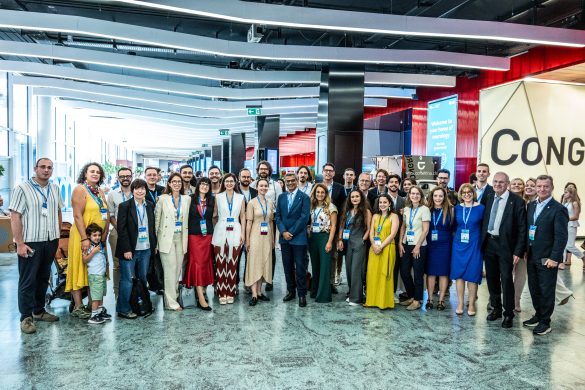
It is my pleasure and privilege to share an update on recent EAN scientific activities in my second term as Chair of the Scientific Committee, following my re-election at our record-breaking EAN Congress 2026 in June. As is customary every two years, the EAN Scientific Committee has now been re-composed and welcomes seven new members. I would like to express my sincere gratitude to all outgoing committee members and to offer a warm welcome to the newcomers. Welcome too to the new Guideline Production Group members selected from a very competitive call, with over 40 applications received for the three available places.

We have recently begun the membership renewal process for Institutional Panel Members. Each Full Institutional Member society can nominate one senior and one junior member to represent their society on a panel, with renewal occurring every two years. These members bring crucial national perspectives to panel activities and help ensure effective communication, promotion, and implementation of EAN initiatives. Our panels are the scientific backbone of the EAN and contribute immensely to the academy’s work, as exemplified by the 2nd edition of the EAN Panel Yearbook, which we published in June, highlighting notable progress identified by our panels in their respective fields over the preceding twelve months: EAN Panel Yearbook – ean.org
Serving the EAN in an official capacity – as a member of a Scientific Panel, a working group, a task force, one of our committees, or on the EAN Board – can sometimes be demanding, but it is always rewarding. Thanks to the high motivation and outstanding expertise of the people who step forward for these roles, the work we put in is invariably reflected in exceptional results. The EAN “Scientific” community has had a summer of such results, with an extremely productive output of publications, with exciting contributions to our congress in Geneva, and as always, plenty more projects in the pipeline.
Our most wide-ranging recent undertaking is probably the Cost of Illness in Neurology in Europe (COIN-Eu) project, which evaluates the socio-economic burden of neurological disorders across the continent. In 2026, the key paper outlining the study design and analytical framework for the whole project has been published, as well as three papers on the cost of sleep disorders, dementia and Parkinson’s disease, with more in progress.
The paper on the Epidemiology and Economic Burden of Sleep Disorders in Europe estimated an annual cost of nearly €423 billion, representing roughly 3% of the combined GDP of high-income European countries and about one-quarter of the region’s total neurological disease burden. Major gaps persist in research, awareness, and policy prioritisation, and these findings underscore the need for greater recognition of sleep health as a critical pillar of public health and neurological well-being.
The economic burden of dementia in Europe: COIN-Eu dementia estimated an annual cost of more than €221 billion across 30 high-income European countries, with families and unpaid informal carers carrying much of the burden. Approximately 8.8 million people living with dementia across high-income European countries in 2019 led to costs equivalent to around 1.6% of regional GDP, underlining the condition’s growing impact on healthcare systems, economies and families.
The Costs of Parkinson’s Disease in Europe: Results of the Costs of Illness in Neurology Initiative found an estimated annual cost of €22.8 billion in 2019 (€28.8 billion in 2025 adjusted for inflation. Around 2.2 million adults were living with Parkinson’s disease across 47 European countries in 2019, resulting in €17.3 billion of direct medical and non-medical costs, €4.4 billion in unpaid informal care provided by family members and friends, and €1 billion in indirect costs due to lost productivity.
Forthcoming papers on the respective costs of multiple sclerosis, stroke, epilepsy, headache disorders, meningitis, CNS Cancer & TBI, polyneuropathies, and motor neuron disease will shed further light on the enormous impact of neurological disorders in Europe. For more details on the overall project, please read the framework paper here: The economic burden of neurological disorders in Europe – COIN-Eu: Study design and analytic framework | The European Journal of Health Economics | Springer Nature Link
In August, we published a paper from the EAN Environmental Influences in Neurology Task Force that examines the relationship between climate change, brain health, and neurological disorders, highlighting the need for greater awareness and evidence-based understanding within neurology. The study identified key priorities and actions for developing a climate-resilient, low-carbon neurology in line with the Brain Health Mission. Read the paper here: Climate Change, Neurological Disorders and Brain Health: To-Know Concepts and Future Actions by the EAN Environmental Influences in Neurology Task Force
Most recently, our project on The Burden of Sleep/Wake Disorders led to the publication of Insomnia as risk factor for brain, mental and general health consequences: an umbrella systematic review in the journal Sleep Medicine Reviews.Our research found thatinsomnia is associated with a 26% higher risk of stroke and 28% higher odds of hospital admission, findings that support recognising insomnia as an important marker of brain, mental and general health.
Next on the schedule is a new paper from the EAN/EPNS joint Task Force on Transition from Childhood to Adulthood. Transition from child to adult care in Paediatric Neurological Disorders in Europe—A joint EAN-EPNS survey of current practices in Europe for healthcare providers has been submitted to the European Journal of Neurology and is currently under revision, so please keep an eye out for this if the topic interests you.
Finally, areminder that application is open for the EAN Science School, taking place on 12-16 March in Salzburg, Austria. This is a great opportunity for clinical neurologists in training to take part in three days of lectures, workshops and networking that are always popular with participants. Take a look at the photos and report from the last edition and submit your application before the deadline on 20 October. More info at Science School – ean.org
As always, a big thank you goes to all the dedicated contributors to all our papers and projects. Your time and effort help the EAN to move forward in our mission to reduce the burden of neurological diseases.
Best wishes
Gereon R. Fink
EAN Scientific Committee Chair