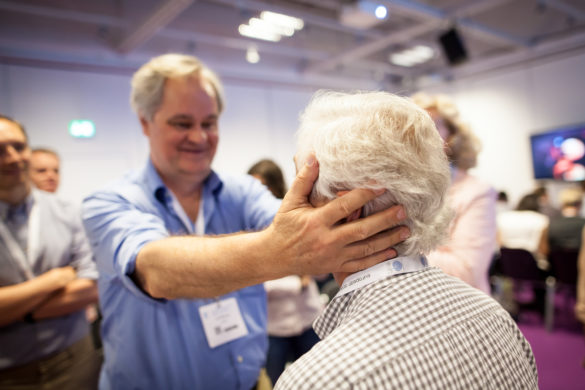

The case-based workshop is a new format of teaching available during the EAN congress, and it has already become very popular. While preparing this workshops requires considerable prerequisite work from the presenters, attendees will have a high level educational experience.
Category
EAN News
-
-
Executive PageFeatured Slider
President’s page: Working for European Neurology: The partners of EAN in Brussels
March 1, 20172 years ago I have already highlighted the work of the European Affairs sub-Committee of the European Academy of Neurology. This is to more closely introduce the partners of EAN at this in Brussels. It is important that our members know about activities of our Society on a European level. -
The EAN may endorse proposals from other organizations as for example: scientific programmes from international or national meetings and conferences organized by other neurology related organizations or national neurological societies, policy statements related to neurology from other European or international organizations and publications from other organizations.
-
13th Annual Update Conference on Clinical Neurology and Neurophysiology
February 20-21, 2017 Jerusalem, Israel, The conference will be held this year in Jerusalem on February 20-21, 2017. The conference will feature two parallel streams and workshops. Participants are invited to… Continue Reading -
EAN Congress newsInterviewsTop Articles
Amsterdam 2017: Which session you should not miss…
February 1, 2017As in the previous year, EANpages asked EAN committee members, panel chairs, and invited speakers which session one should not miss at the upcoming congress in Amsterdam 2017. Please find their answers below! -
InterviewsTop Articles
Interview with Prof. Walter McNicholas President of the European Sleep Research Society (ESRS)
February 1, 2017David B. Vodušek (DV): Can you briefly illustrate the structure and missions of the ESRS to the readers of the EANpages? Prof. Walter McNicholas (WM): Founded in 1972, the European Sleep and Research Society (ESRS) is an international scientific non-profit organization that promotes all aspects of sleep research and sleep medicine. -
EAN Congress newsTop Articles
Amsterdam 2017 – The Educational Sessions – Hands-on courses
February 1, 2017
By Claudia Sommer
Hands-on courses include the active participation of the attendees. This course format is used whenever the learning objectives contain specific skills, as in neurophysiology, neurosonology, neuro-opthalmology, and movement disorders. A hands-on course may… Continue Reading -

EAN Congress newsTop Articles
Neurological News from the Netherlands II – the land of the 3rd EAN Congress: Multiple sclerosis research in The Netherlands
February 1, 2017
By Brigit de Jong
Multiple sclerosis (MS) research has a longstanding history in the Netherlands with an impressive impact on global knowledge related to MS pathogenesis, diagnosis and treatment. During the time period where no disease modifying treatments options were… Continue Reading -

Executive PageFeatured Slider
President’s Page: 200 years since James Parkinson’s first description of the disease named after him
February 1, 2017It is unknown which of his many books James Parkinson (1755-1825) has considered the most important one. His 500 pages ‘Medical Admonitions’ for lay people, his ‘Chemical Pocket Book’ covering interesting facts on modern chemistry of the late 18th century, the ‘Hospital Pupil’ on the educational standards of physician education, his collection of minerals and fossils ‘Organic Remains of a Former World’ or any other of his many contributions. History has clearly shown that his most important contribution was his 1817 ‘Essay on the Shaking Palsy’ which celebrates its 200th birthday this year. -
EAN Congress newsTop Articles
Amsterdam 2017 – The Educational Sessions – Teaching Courses
January 3, 2017
by Prof. Dr. Claudia Sommer
Teaching courses are designed to convey knowledge on a topical area within Neurology, with the ultimate aim to help the attendees to better understand this area, so that with this enhanced knowledge they will improve… Continue Reading -
EAN Congress newsTop Articles
Neurological News from the Netherlands – the land of the 3rd EAN Congress: Neuro-oncology
January 3, 2017
By Anja Gijtenbeek, on behalf of the Dutch Society of Neuro-Oncology
The diagnosis and care of patients with neurological malignancies or neurological complications of systemic cancer pose many challenges, and requires multidisciplinary expertise.
Nearly 25 years ago, two founding fathers… Continue Reading -
InterviewsTop Articles
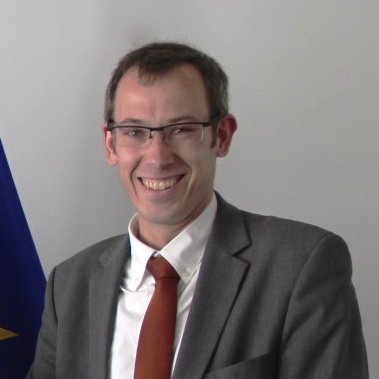
Interview with Mr. F. Destrebecq- Executive Director of the European Brain Council (EBC)
January 3, 2017David B. Vodušek (DV): Can you kindly illustrate how the idea of creating NBCs came about and what their intrinsic value is to EBC? F. Destrebecq (FD): The EBC has been founded to catch the ear of the EU decision makers. However, soon it became clear that by focusing only on Brussels, the EBC would not be able to achieve its full potential of influence. -
EAN Congress newsInterviewsTop Articles
Amsterdam 2017: Which session you should not miss…
January 3, 2017As in the previous year, EANpages asked EAN committee members, panel chairs, and invited speakers which session one should not miss at the upcoming congress in Amsterdam 2017. Please find their answers below! -
Abstract Submission Deadline is January 13, 2017!
In order to submit an abstract, please log in/register on www.ean.org/amsterdam2017 and go to your MyEAN area. There you can update your personal data and also find a link to the abstract submission… Continue Reading -
Executive PageFeatured Slider
President’s Page: On the value of European health care funding for neurological patients
December 1, 2016European institutions are sometimes discredited and put into questions. This is particularly true in these times of populistic political movements which try to steer the wheel of European unification backwards. Reasons given by opponents are that ‘European efforts are considered too slow, too burocratic and too inflexible’. ‘There are too many cooks preparing the meal’. Sometimes we hear this also from scientists. The logical conclusion is to spend the money at home in their own countries. The latter view is sometimes even expressed by people who in principle share the European perspective. Populistic politicians go so far to even question the whole EU project. In this respect medical research community can make an argument and a big contribution to the understanding why the EU is important.