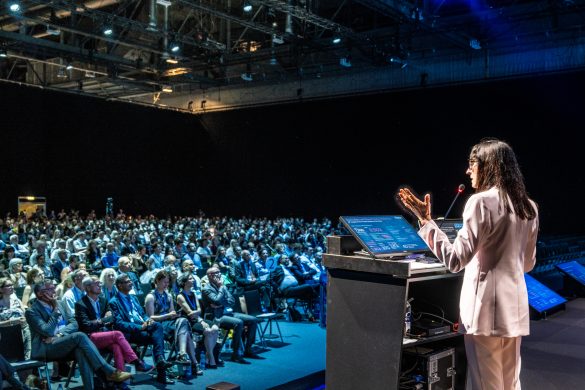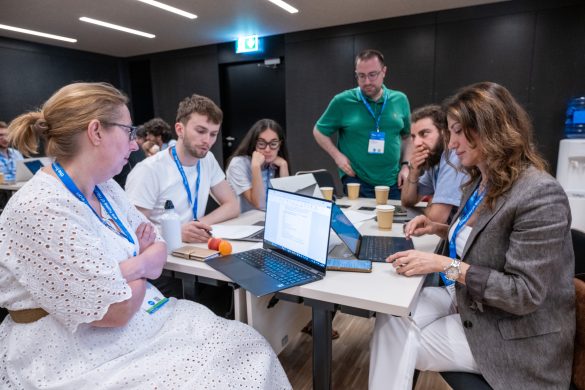
At the upcoming EAN Congress 2026 in Geneva, we are pleased to once again offer an exciting educational programme, including seven different educational session types. You will have the chance to visit hybrid sessions like Teaching Courses, Controversy Sessions, Interactive Sessions and Career Development Sessions. Furthermore, our Hands-On Courses, e-Hands-On Courses and Case-Based Workshops will offer onsite learning opportunities for a limited number of participants. We asked members of the Teaching Course Sub-Committee to highlight some of the sessions from across the different course formats which might inspire you to get started and create your personal congress programme at eanvirtualcongress.org.
eHoc01: Reading Course: White and darks spots in the brain
highlighted by Roland Wiest, TCsC Chair
This Hands-On Course enables participants to learn and further develop a practical approach to differentiating white matter lesions of different origin and classify microbleeds and other lesions associated with signal loss on MRI. This is particularly important to reliably navigate distinct patterns of lesions on MRI – with respect to the revised 2024 McDonald Criteria in MS, the Boston criteria 2.0 for CAA and its differential diagnosis of SVD. The online reading format will empower neurologists in the interpretation of challenging cases and strengthen their reading experience, guided by experienced top readers in this domain.
A new and exciting format, you should not miss this unique opportunity – and remember to bring your own laptop to this session to benefit from this experience.
Add this to your personal programme on the EAN Virtual Congress Platform: EAN 2026 – Session
HoC09: EAN/MDS-ES: Infusion therapies management in advanced Parkinson’s disease
highlighted by Martina Bočková
Continuous drug infusion strategies represent a dynamic and rapidly evolving therapeutic approach to managing advanced Parkinson’s disease symptoms. This Hands-On Course offers a unique opportunity to discuss individualised patient selection, treatment strategies, and complication management directly with leading experts from prestigious European centres. Participants will also gain hands-on experience with both intestinal and subcutaneous pumps, learning their settings and advanced functions while rotating between the stations.
Add this to your personal programme on the EAN Virtual Congress Platform: EAN 2026 – Session
CBW01: EAN/IFCN-EMEAC: Head down, lids heavy, spine bent: Push up your differential diagnosis
highlighted by Anne Bruijnes
The perfect way to start the congress on Saturday morning is with this Case-Based Workshop. This interactive in-person only session tackles some of the most diagnostically challenging neuromuscular presentations: ptosis, dropped head syndrome and camptocormia. I recommend this session for its opportunity to compare and contrast neuromuscular junction disorders, myopathies, neuropathies, motor neuron disease and mimics side-by-side, guided by experts who bring clarity to complex patterns in small group settings. It connects anatomical regions that are often assessed separately, providing clinicians with an integrated and clinically applicable framework that can directly improve diagnostic accuracy.
Add this to your personal programme on the EAN Virtual Congress Platform: EAN 2026 – Session
TC15: EAN/MDS-ES: Synucleinopathies: Current and future treatment strategies
highlighted by Roberto Erro, MDS-ES representative
This Teaching Course will explore recent biomarkers and diagnostic advancements in synucleinopathies to highlight how early and precise detection can accelerate disease-modifying therapies. It will provide practical clinical insights for managing dementia with Lewy bodies, multiple system atrophy, and Parkinson’s disease while discussing future therapeutic perspectives through a precision-medicine lens.
Add this to your personal programme on the EAN Virtual Congress Platform: EAN 2026 – Session
eHoC02: The role of EEG to guide diagnosis and treatment in different clinical scenarios highlighted by Anita Kamondi, IFCN-EMEAC representative
This e-Hands-On Course aims to discuss different clinical scenarios of varying complexity in which the general neurologist must try to make a diagnosis, evaluate possible therapies, and formulate a prognosis: I) the interplay between seizure semiology and EEG; II) the role of EEG in the diagnosis of unconscious patients; and III) the combination of different modalities to overcome limitations of EEG alone. The session will be interactive using an online application. Attendants are asked to take their own laptop, so they can participate in reading the EEGs and evaluate other neurophysiological results interactively. The application will be introduced in the first lecture.
Add this to your personal programme on the EAN Virtual Congress Platform: EAN 2026 – Session
IAS01: Video evaluation of complex behaviours in sleep disorders: Pearls and pitfalls for differential diagnosis
highlighted by Stine Knudsen-Heier
What is wrong (and what do you do) if your patients kick and scream in their sleep?
I recommend you to join this interesting interactive session on important neurological sleep disorders showing complex behaviours at night. The session will take you through video-based presentations and discussion of three distinct disorders: REM Sleep Behaviour Disorder (RBD), Sleep-related Hypermotor Epilepsy, and Disorders of Arousal. They pose diagnostic challenges due to overlapping clinical features and potential mimics. You will learn their typical and atypical manifestations and get a deeper understanding of the key clinical features while being able to participate in interactive voting.
Welcome to neurology by night!
Add this to your personal programme on the EAN Virtual Congress Platform: EAN 2026 – Session
CDS04: Practical guidance for emerging investigators
highlighted by Benedetta Storti, RRFS representative
I would like to recommend to you the Career Development Session ‘Practical guidance for emerging investigators’, as it addresses several key skills that are essential for young neurologists and researchers at the beginning of their academic careers. The session brings together three highly experienced experts, each offering practical, experience-based insights into crucial aspects of academic research, including survey design, multi-centre collaboration, and the peer review process. I believe this session is particularly relevant because it focuses not only on methodological and scientific rigour, but also on the practical realities of building a successful research career. By sharing their expertise and lessons learned, the speakers provide valuable guidance that can help early-career investigators navigate academic research more confidently, effectively, and enjoyably.
Add this to your personal programme on the EAN Virtual Congress Platform: EAN 2026 – Session
HoC06: EAN/IFCN-EMEAC: Diagnostic and therapeutical applications of non-invasive brain stimulation (Level 2)
highlighted by Hatice Tankisi
Get practical experience with transcranial magnetic stimulation (TMS) and transcranial direct current stimulation (tDCS) through live demonstrations on healthy volunteers, and explore stimulation protocols on different stations, such as coil/electrode positioning, intensity settings, and clinical applications in neurology, stroke rehabilitation, and chronic pain.
A unique opportunity to learn directly from experts and see non-invasive brain stimulation in action!
Add this to your personal programme on the EAN Virtual Congress Platform: EAN 2026 – Session
CoN02: Guidelines on a European level – realistic or not?
highlighted by Josep Valls-Solé, EQAB representative
The EAN goals include providing educational fora for young neurologists, promoting excellence in clinical practice and empowering healthcare professionals by sharing and increasing knowledge about neurological conditions. Therefore, it is difficult to highlight one particular educational session to attend. I would recommend visiting a Controversy Session, since I like listening to structured but different points of view over the same controversial topic. Particularly I think that the session on guidelines could be illuminating on whether or not we need European guidelines for diagnosis and treatment of neurological disorders.
Add this to your personal programme on the EAN Virtual Congress Platform: EAN 2026 – Session
Have a look at the EAN Congress Platform to find the whole programme and all relevant details about the sessions.
**We look forward to seeing you in Geneva in one of our educational sessions**