by Anne Bruijnes
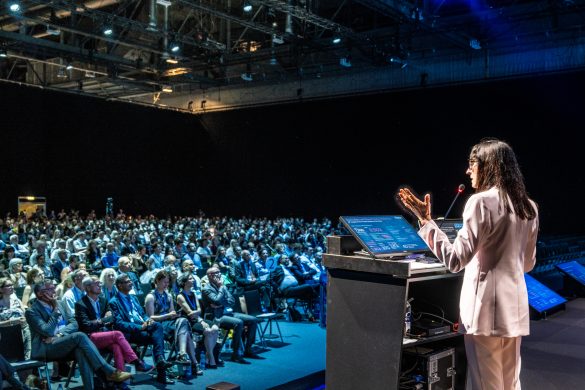
During the late afternoon of the first day of the EAN Congress 2026, a full room gathered for an overview of new and innovative treatments for myasthenia gravis (MG). The session was chaired by Massimiliano Filosto (Italy) and Anna Rostedt Punga (Sweden). As the therapeutic landscape has changed rapidly in recent years, an update on the expanding range of available drugs was highly welcome.
Rostedt Punga opened with an excellent overview of basic immunology in myasthenia gravis. She explained the different classifications of the disease—based on antibody status, age of onset, phenotype, or presence of thymoma—and briefly discussed demographic differences, including the varying prevalence of anti‑MuSK+ MG between northern and southern countries. She then outlined mechanisms of action such as blocking, modulation, and complement activation. The role of AChR antibodies and the pathways of complement activation transitioned smoothly into a discussion of MuSK antibodies, described as “very busy antibodies”. She also highlighted the involvement of T‑cells and B‑cells, and mentioned the discovery of microRNA, awarded the 2024 Nobel Prize in Physiology or Medicine. Although promising as biomarkers, microRNA techniques still require refinement before routine clinical use. She concluded with an overview of current therapeutic targets. Key points included the lack of benefit of symptomatic treatment with acetylcholine inhibitors, thymus removal and complement inhibitors in MuSK+ MG. T‑cell inhibition appears promising in both AChR+ and MuSK+ MG, though evidence remains preliminary.
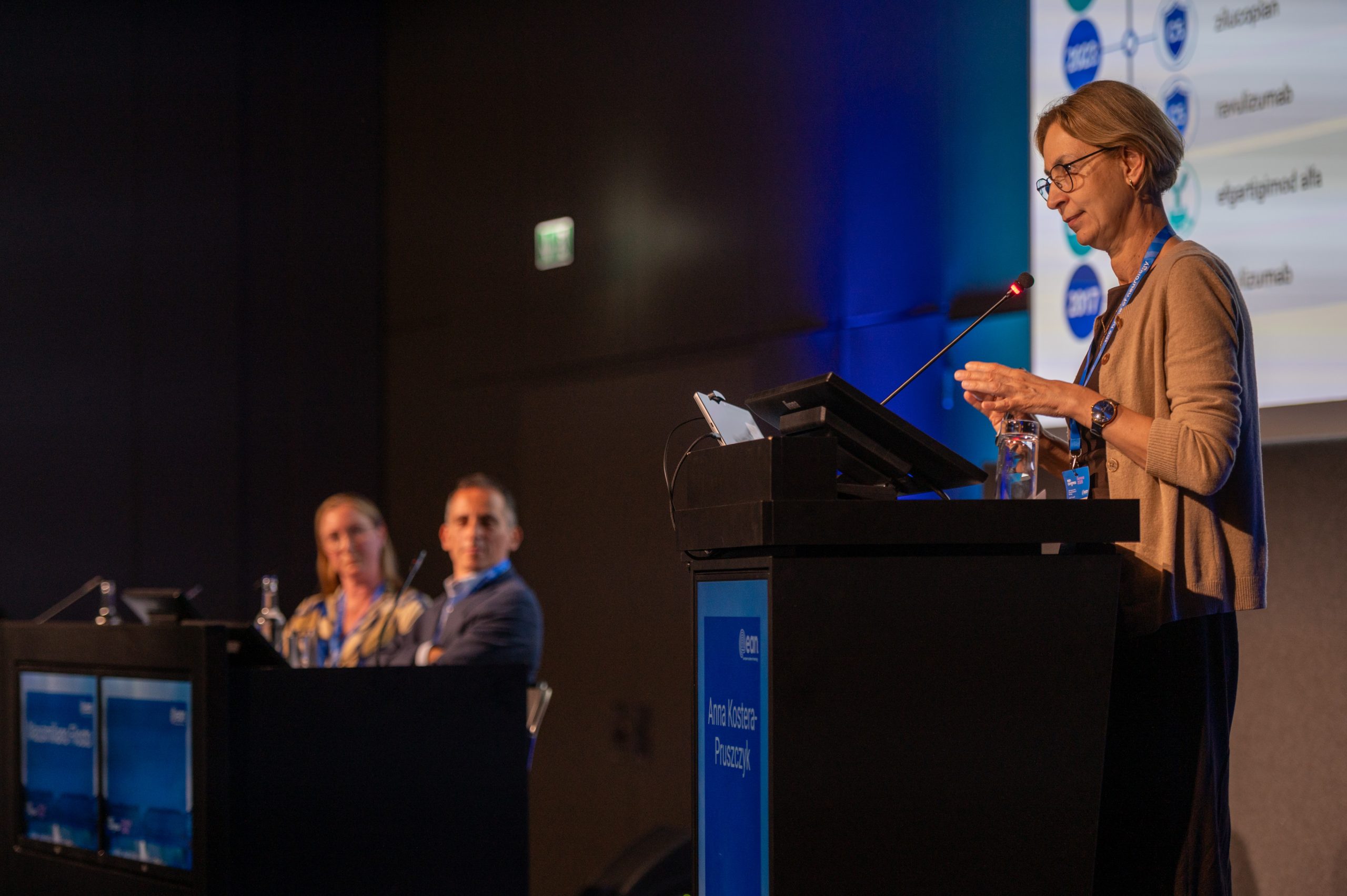
The second lecture, delivered by Anna Kostera‑Pruszczyk (Poland), focused on innovative therapies and lessons from clinical and real‑world studies. She presented a timeline of EMA approvals, illustrating the rapid pace of development—at least one new drug per year in recent years, particularly C5 inhibitors and FcRn blockers. Reviewing clinical trial data, she emphasised that C5 inhibitors are true game‑changers, offering rapid improvement compared with agents like azathioprine, which require months to take effect. They also improve fatigue scores, distinct from fatigability. FcRn blockers such as efgartigimod and rozanolixizumab similarly show rapid onset and clear benefit over placebo in both fatigability and fatigue. She also discussed the use of nipocalimab and eculizumab in refractory MG in children and adolescents. Despite their promise, these therapies face limitations: variable access, lack of biomarkers to guide treatment, and absence of head‑to‑head comparisons. She closed with an essential reminder to vaccinate patients receiving these therapies—especially against meningococcal disease, but ideally also against other encapsulated pathogens.
The final lecture, given online by Aiden Haghikia (Germany), explored CAR‑T and CAAR‑T cell therapies. Approved since 2017 for haematologic malignancies and used in more than 45,000 patients, these therapies are increasingly applied in neurological diseases. Beyond myasthenia gravis, he presented examples of CAR‑T use in Lambert‑Eaton myasthenic syndrome, chronic inflammatory demyelinating polyneuropathy, and multiple sclerosis. A striking case involved a young patient with MG who had experienced five crises in two years: three days after a single CAR‑T infusion, her arm‑lifting endurance improved from 20 to 75 seconds. From being completely bedridden, she progressed to walking with a frame after six days and independently after thirteen.
In summary, the session highlighted major advances in myasthenia gravis therapy. Rostedt Punga reviewed immunological mechanisms and emerging biomarkers, emphasising differences between AChR+ and MuSK+ disease; Kostera‑Pruszczyk presented rapid‑acting innovative treatments—especially C5 inhibitors and FcRn blockers—supported by both trial and real‑world data, while noting challenges such as access and lack of biomarkers; and Haghikia showcased the expanding role of CAR‑T and CAAR‑T therapies in MG and other neurological disorders, illustrated by dramatic patient improvements. Overall, the field is evolving rapidly, with increasingly targeted and effective treatment options.