by Lukas Gattermeyer-Kell, Graz, Austria
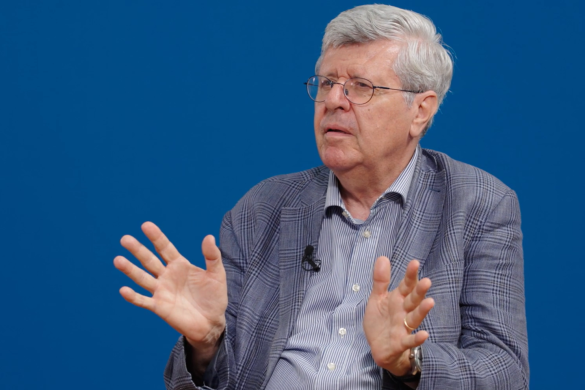
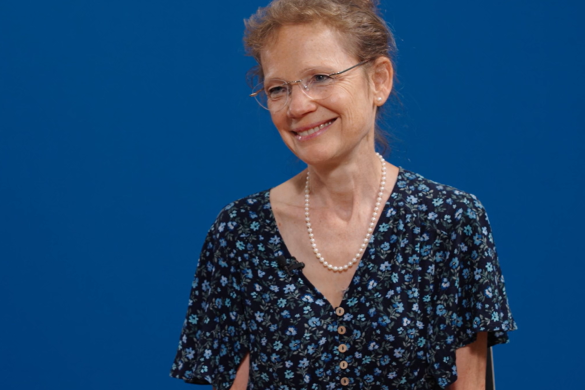
This morning’s joint session co-hosted by the European Academy of Neurology (EAN) and the International Parkinson and Movement Disorder Society – European Section (MDS-ES) featured not only a distinguished panel but also a topic that perfectly reflected this year’s congress motto, Brains, Bytes & Beyond: Tech in Neurology. Elena Moro, Günther Deuschl, and Irena Rektorová discussed the current role and future perspectives of neuromodulation in the treatment of Parkinson’s disease (PD) and dementia with Lewy bodies (DLB), highlighting both established therapies and emerging technological innovations.
EAN President Elena Moro opened the session with an overview of the remarkable evolution of deep brain stimulation (DBS). Although the precise mechanisms underlying DBS remain incompletely understood, its clinical efficacy in PD is firmly established and supported by international consensus guidelines. She emphasised that DBS provides sustained long-term symptomatic benefit despite ongoing disease progression. According to Moro, successful DBS depends on three key factors: careful patient selection, accurate lead placement, and optimal stimulation programming. While some genetic variants have previously been suspected to negatively influence cognitive outcomes after DBS, recent evidence suggests that their clinical relevance may be limited. She also addressed unresolved challenges, including worsening gait and balance as well as postoperative apathy, which may partly result from unintended stimulation of limbic circuits. Looking ahead, she highlighted important technological advances such as equivalent outcomes with awake and asleep implantation, the possibility of recording biomarkers directly from the basal ganglia, and the development of adaptive closed-loop stimulation systems. Artificial intelligence (AI)-assisted reconstruction of lead position and basal ganglia anatomy may further optimise DBS programming in the future.
Former EAN President Günther Deuschl then turned the audience’s attention to magnetic resonance-guided focused ultrasound (MRgFUS). He began by explaining the physical principles behind therapeutic ultrasound and illustrated its expanding range of applications, from transcranial neuromodulation and blood–brain barrier opening to tissue ablation and histotripsy. Focusing on MRgFUS, he described the procedure and highlighted one of its unique advantages: the possibility of reversible target inactivation before permanent lesioning, allowing clinicians to assess both therapeutic efficacy and potential adverse effects. In Europe, MRgFUS is approved for unilateral thermal ablation of thalamic, subthalamic, and pallidal targets in idiopathic PD, essential tremor (ET), and neuropathic pain, while bilateral treatment is approved for ET. Five-year follow-up data demonstrate durable tremor control, although a slight decline in efficacy over time has been observed. Bilateral treatment also improves head and voice tremor but may increase the risk of adverse effects, including gait and balance disturbances, sensory symptoms, and mild paresis, most of which are transient. While the ventral intermediate nucleus remains the standard target for ET, the optimal target for PD is still under investigation. Current evidence suggests that the subthalamic nucleus and pallidothalamic tract are promising candidates, although bilateral pallidothalamic tract treatment has been associated with an increased risk of dysarthria and even anarthria.
EAN Programme Committee Chair Irena Rektorová concluded the session with an overview of non-invasive brain stimulation techniques, which are currently not approved for either PD or DLB. She clearly explained the principles of transcranial magnetic stimulation (TMS) and transcranial electrical stimulation (tES), while also outlining the methodological challenges that currently limit widespread clinical implementation. In PD, repetitive transcranial magnetic stimulation (rTMS) has demonstrated mild to moderate improvements in motor symptoms, although these remain inferior to the effects of dopaminergic medication. Interestingly, data from Rektorová’s own group suggest that rTMS may improve hypokinetic dysarthria, a symptom that often responds poorly to levodopa. In DLB, preliminary studies indicate that transcranial alternating current stimulation (tACS) may improve cognitive function, providing encouraging evidence for future therapeutic applications.
This session offered a fascinating overview of both invasive and non-invasive neuromodulation for movement disorders. While established therapies such as DBS and MRgFUS continue to evolve through technological refinement, innovations including adaptive closed-loop stimulation and AI-assisted programming promise to further improve outcomes. At the same time, non-invasive stimulation techniques may eventually offer valuable treatment options for symptoms that remain insufficiently addressed by current pharmacological therapies.