by Katarzyna Kozala, Medical University of Vienna
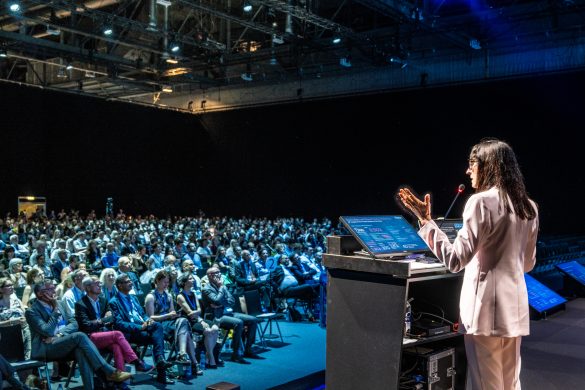
Although it was the final morning of the congress, the room quickly filled, reflecting the growing interest in chronic inflammatory demyelinating polyneuropathy (CIDP), autoimmune nodopathies and complement-targeted therapies.
Chaired by Panos Stathopoulos and Matteo Gastaldi, the symposium brought together experts in basic science and clinical neurology to discuss how recent discoveries are beginning to reshape patient care.
Opening the session, Frauke Stascheit explored the emerging role of complement in CIDP. While current diagnostic criteria help identify patients with the disease, she pointed out that treatment response remains highly variable, suggesting that different biological mechanisms may underlie apparently similar clinical presentations.
Drawing on recent pathological and proteomic studies, Stascheit presented growing evidence that complement activation is consistently detectable in affected nerve tissue and appears to correlate with disease activity. At the same time, she highlighted the remarkable heterogeneity seen in patients with CIDP, reinforcing the idea that different immune endotypes may exist. Identifying these endotypes, she argued, will become increasingly important as new targeted therapies enter clinical practice. Rather than treating all patients in the same way, future management may rely on biomarkers that help match individual patients to the most appropriate therapy.
The focus then shifted to autoimmune nodopathies, where Jérôme Devaux reflected on how discoveries in basic science have transformed clinical practice over the past decade. His presentation illustrated how the identification of antibodies targeting nodal and paranodal proteins has led to the recognition of autoimmune nodopathies as a distinct disease entity rather than simply a subtype of CIDP.
Importantly, these patients often respond poorly to intravenous immunoglobulins despite showing electrophysiological features that resemble CIDP. Devaux explained how experimental studies have revealed different pathogenic mechanisms depending on the target antigen, providing a biological explanation for the distinct clinical behaviour of these disorders. This deeper understanding has also translated into more effective treatment strategies, with B-cell depletion using rituximab emerging as one of the most successful therapeutic approaches for many patients with autoimmune nodopathies.
Looking ahead, Elisabeth Chroni reviewed the growing landscape of complement-targeted therapies for CIDP. Although current treatments have dramatically improved outcomes, she reminded the audience that many patients continue to experience residual disability, sensory symptoms or fatigue despite receiving standard therapy.
Chroni presented several complement inhibitors currently under clinical investigation, reflecting the increasing evidence that complement contributes to disease activity in at least a subgroup of patients. While early clinical studies have produced encouraging results, she also emphasised the importance of interpreting these findings with caution. Some larger trials have not met their primary endpoints, highlighting both the complexity and the biological heterogeneity of CIDP. Nevertheless, complement inhibition remains a promising strategy that may prove particularly valuable for carefully selected patients.
Perhaps the strongest message of the session was that understanding the biology of CIDP is no longer simply a research question—it is becoming increasingly relevant for clinical practice. As the speakers demonstrated, advances in immunology are already improving disease classification, identifying new therapeutic targets and supporting a more personalised approach to treatment. While important questions remain, particularly around patient selection and long-term outcomes, the field is clearly moving towards precision medicine.
By bringing together advances in pathology, disease mechanisms and clinical trials, the symposium provided an excellent overview of how translational research is shaping the future of inflammatory neuropathies. For neurologists, the take-home message was clear: better understanding of disease biology is beginning to translate into better, more individualised care for patients with CIDP and autoimmune nodopathies.