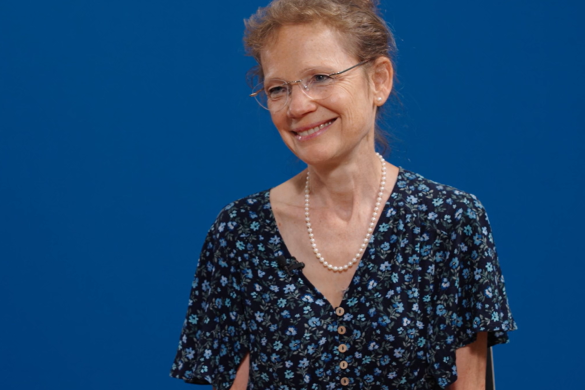
Not long ago, a European neurologist could reassure a mosquito-bitten patient without hesitation. Ticks were the threat; mosquitoes were a nuisance. That reassurance is no longer so easy to give. Mosquito-borne infections of the nervous system – even in Europe of increasing importance was a full-room session that brought practitioners up to speed on one of the most consequential shifts in European neuroinfectiology in a generation. Chaired with clarity and purpose by Bettina Pfausler (Innsbruck), it covered not just exotic travel medicine but a threat that is now, quite literally, on our doorstep.
Christian Merkenschlager (Neusäß, Germany) set the scene with the ecological data. Climate change is already causing measurable shifts in mosquito habitat across Europe. Temperature seasonality and precipitation patterns – rather than land use – are the dominant drivers of where mosquitoes can now survive and breed. His modelling shows that while most native European Anopheles species will lose habitat by 2100 as conditions become too warm, invasive species like Aedes albopictus are filling the gap, spreading northward into regions that were previously inhospitable.
Juan Carlos Garcia-Moncó (Bilbao, Spain) made sure the room didn’t mistake these for simple tropical fevers. Dengue can cause encephalitis, myelitis, and Guillain-Barré syndrome. Zika’s neurological legacy – particularly its association with Guillain-Barré and, in neonates, microcephaly – is well established. Chikungunya, which saw a dramatic global resurgence in 2024–25, can trigger encephalopathy and myeloneuropathy, especially in older patients. Garcia-Moncó walked through the clinical differences between the three diseases clearly and practically, including what diagnostic workup to request and what treatment options exist.
Tamar Akhvlediani (Tbilisi, Georgia) turned to West Nile virus, transmitted by Culex mosquitoes and already causing genuine neurological harm across the continent. Neuroinvasive disease – encephalitis, meningitis, acute flaccid paralysis – occurs in a minority of infected individuals, but the overall case numbers are rising. Her practical take-home: think West Nile in any patient presenting with meningoencephalitis in summer or autumn, even in the absence of travel.
Prof.Pfausler closed with a challenge to a deeply comfortable assumption. Cerebral malaria must stay in the differential even when a patient has not recently travelled. Migrant populations arriving from endemic regions can carry asymptomatic Plasmodium falciparum parasitaemia that recrudesces under physiological stress. The condition is treatable if caught promptly – and fatal if missed. Travel history alone is not a reliable filter.
This teaching course genuinely changed the way participants will approach a febrile neurological presentation. The mosquito is now a neurologist’s problem, and the time to update our thinking is now.
Social media: Climate change has made the mosquito a neurological threat across Europe. #EAN2026 was a wake-up call for every neurologist who thought these were someone else’s diseases.