By Claudia Sommer
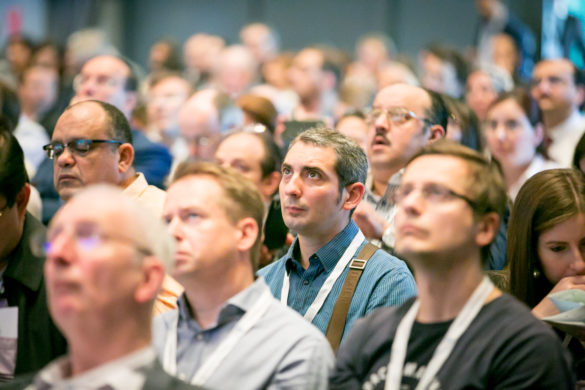
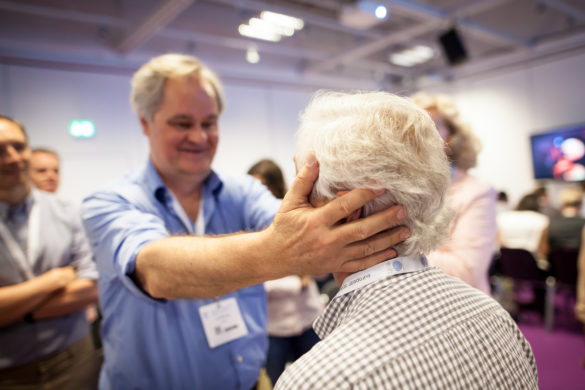
Hands-on courses include the active participation of the attendees. This course format is used whenever the learning objectives contain specific skills, as in neurophysiology, neurosonology, neuro-opthalmology, and movement disorders. A hands-on course may… Continue Reading
Category
EAN News
-
By Claudia Sommer
Hands-on courses include the active participation of the attendees. This course format is used whenever the learning objectives contain specific skills, as in neurophysiology, neurosonology, neuro-opthalmology, and movement disorders. A hands-on course may… Continue Reading -

EAN Congress newsTop Articles
Neurological News from the Netherlands II – the land of the 3rd EAN Congress: Multiple sclerosis research in The Netherlands
February 1, 2017
By Brigit de Jong
Multiple sclerosis (MS) research has a longstanding history in the Netherlands with an impressive impact on global knowledge related to MS pathogenesis, diagnosis and treatment. During the time period where no disease modifying treatments options were… Continue Reading -
Executive PageFeatured Slider
President’s Page: 200 years since James Parkinson’s first description of the disease named after him
February 1, 2017It is unknown which of his many books James Parkinson (1755-1825) has considered the most important one. His 500 pages ‘Medical Admonitions’ for lay people, his ‘Chemical Pocket Book’ covering interesting facts on modern chemistry of the late 18th century, the ‘Hospital Pupil’ on the educational standards of physician education, his collection of minerals and fossils ‘Organic Remains of a Former World’ or any other of his many contributions. History has clearly shown that his most important contribution was his 1817 ‘Essay on the Shaking Palsy’ which celebrates its 200th birthday this year. -
EAN Congress newsTop Articles
Amsterdam 2017 – The Educational Sessions – Teaching Courses
January 3, 2017
by Prof. Dr. Claudia Sommer
Teaching courses are designed to convey knowledge on a topical area within Neurology, with the ultimate aim to help the attendees to better understand this area, so that with this enhanced knowledge they will improve… Continue Reading -
EAN Congress newsTop Articles
Neurological News from the Netherlands – the land of the 3rd EAN Congress: Neuro-oncology
January 3, 2017
By Anja Gijtenbeek, on behalf of the Dutch Society of Neuro-Oncology
The diagnosis and care of patients with neurological malignancies or neurological complications of systemic cancer pose many challenges, and requires multidisciplinary expertise.
Nearly 25 years ago, two founding fathers… Continue Reading -
InterviewsTop Articles
Interview with Mr. F. Destrebecq- Executive Director of the European Brain Council (EBC)
January 3, 2017David B. Vodušek (DV): Can you kindly illustrate how the idea of creating NBCs came about and what their intrinsic value is to EBC? F. Destrebecq (FD): The EBC has been founded to catch the ear of the EU decision makers. However, soon it became clear that by focusing only on Brussels, the EBC would not be able to achieve its full potential of influence. -
EAN Congress newsInterviewsTop Articles
Amsterdam 2017: Which session you should not miss…
January 3, 2017As in the previous year, EANpages asked EAN committee members, panel chairs, and invited speakers which session one should not miss at the upcoming congress in Amsterdam 2017. Please find their answers below! -
Abstract Submission Deadline is January 13, 2017!
In order to submit an abstract, please log in/register on www.ean.org/amsterdam2017 and go to your MyEAN area. There you can update your personal data and also find a link to the abstract submission… Continue Reading -
Executive PageFeatured Slider
President’s Page: On the value of European health care funding for neurological patients
December 1, 2016European institutions are sometimes discredited and put into questions. This is particularly true in these times of populistic political movements which try to steer the wheel of European unification backwards. Reasons given by opponents are that ‘European efforts are considered too slow, too burocratic and too inflexible’. ‘There are too many cooks preparing the meal’. Sometimes we hear this also from scientists. The logical conclusion is to spend the money at home in their own countries. The latter view is sometimes even expressed by people who in principle share the European perspective. Populistic politicians go so far to even question the whole EU project. In this respect medical research community can make an argument and a big contribution to the understanding why the EU is important. -
…and register to the EAN congress in Amsterdam 2017. It is not only that you can save more than 100€ if you register now, but you will be able to cover the big five neurological diseases, as well as rare… Continue Reading
-
52nd Turkish National Neurology Congress
-
Executive PageFeatured Slider
President’s Page: The many faces of National Neurological Societies in Europe
November 4, 2016EAN pages strives to present one country every month to the readers of the EAN pages. We have seen presentations from Albania, Croatia, Denmark, Estonia, Finland, Georgia, and Ireland so far and I would draw your attention to these wonderful articles in our newsblog. This month we have Latvia and in December it will be Moldovia. The country where the EAN congresses take place (so far Germany and Denmark) are even presented in a series of articles covering special aspects of the development of local neurology. The top neurologists from these countries take their time to present important aspects of their country like Denmark did before the Copenhagen congress in 2016. In a series of seven articles they have presented the state of the art and research in their country concerning basic MS research, pain, dementia, clinical MS research, cerebral blood flow research, clinical neurophysiology and headache. The care structures for patients and how research is helping to develop new treatments and new innovations are outlined and one can learn from their success. Whenever I read their presentations it reminds me to the rich history of neurology in Europe. All the different countries were able to show their particular contribution to the field and the achievements they have reached to provide better patient care. -
InterviewsFeatured Slider
Interview with Prof. Claudia Sommer, Chair EAN Teaching Course sub-Committee
November 1, 2016David B. Vodušek (DV): As a senior experienced European neurologist, can you illustrate the role you give to EAN within the community of European Neurologists? Claudia Sommer (CS): The EAN is the umbrella society for the community of European Neurologists, and I am more than glad that after many years, we have achieved to build one strong society. -
11th ESO Karolinska Stroke Update Conference
-
Since August 2016 the European Academy of Neurology is a member of the Guidelines International Network (G-I-N). The G-I-N is an international non-profit-distributing association of organizations and individuals involved in the development and use of clinical practice guidelines.